
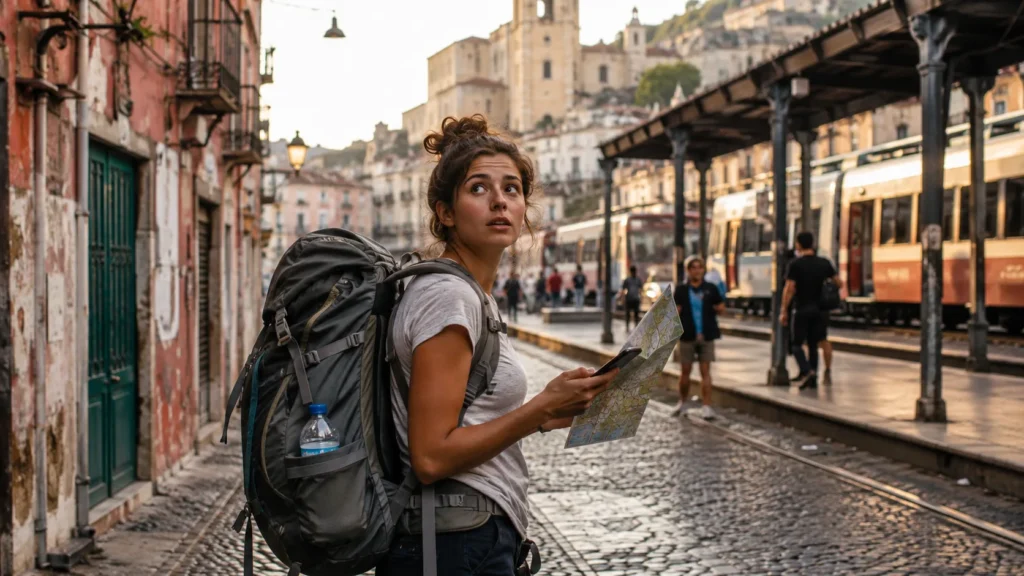
There is a moment in almost every Europe backpacking trip when the fantasy finally slips. Maybe it happens on a packed platform in Rome, while your shirt is sticking to your back and your train delay keeps getting longer. Maybe it happens in a hostel dorm at 2 a.m., when someone’s plastic bag sounds louder than a nightclub speaker. Or maybe it hits when you reach the famous viewpoint from your saved TikTok folder and realize the “hidden gem” is full of people holding the exact same phone angle. That does not mean the trip is ruined, though. It means the real journey has started, and for a new generation of travelers, that reality is becoming more useful, more honest, and honestly more interesting than the polished travel clips that sold the dream in the first place.
Europe backpacking has always carried a little myth around it. The classic version is easy to picture: one oversized backpack, a rail pass, cheap hostels, random friends from five countries, and sunrise walks through old cities that look like movie sets. Social media simply upgraded the myth with better editing, sharper color grading, and a soundtrack that makes every alley look like a personal transformation scene. But the 2026 backpacker is starting to ask harder questions before booking that one-way flight. How much does it actually cost to move between cities? Are famous capitals still worth it on a tight budget? What happens when the hostel is social but not clean, the train is romantic but sold out, and the “budget meal” is still more expensive than expected? These questions are not killing the adventure; they are making it more grounded.
Why Europe Backpacking Looks Different Offline
The offline version of Europe backpacking is usually less cinematic and more physical. Your bag gets heavier after the third staircase, even if you packed light with the confidence of a minimalist influencer. Cobblestone streets are beautiful until your wheels, ankles, or knees start arguing with every uneven stone. Popular hostels can be full of energy, but they can also mean waiting for the shower, sleeping through hallway noise, and learning very quickly that not every traveler has the same idea of shared-space etiquette. Still, these imperfect details are not failures of the trip. They are the actual texture of backpacking, and they often become the stories people remember more clearly than the sunset photo they posted later.
Part of the shift comes from the gap between content and movement. A TikTok clip can compress one city into fifteen seconds, but a real day has logistics, weather, hunger, laundry, and wrong turns. In a short video, a traveler appears at a landmark, smiles, spins, and cuts to the next country. In real life, that same traveler may have spent forty minutes finding a locker, fifteen minutes comparing transit apps, and another hour figuring out whether the hostel check-in desk actually opens before dinner. This is why smart backpackers are learning to plan for friction instead of pretending it will not happen. The more realistic the expectations, the more enjoyable the journey becomes, because every delay stops feeling like a personal disaster and starts feeling like part of the route.
There is also a social pressure attached to travel now that older backpackers did not experience in the same way. Young travelers are not just visiting places; they are also quietly comparing their trips with hundreds of saved posts, reels, vlogs, and “perfect itinerary” threads. That can make a normal travel day feel strangely underwhelming, even when it is objectively amazing. Standing in a crowded square can feel like a letdown if the internet promised silence, golden light, and effortless magic. But when backpackers drop the need to recreate someone else’s clip, Europe becomes easier to enjoy. A cheap sandwich on a train platform, a random conversation in a hostel kitchen, or a rainy walk through a neighborhood with no viral ranking can become the kind of travel memory that actually belongs to them.
The New Budget Reality for Young Travelers
The word “budget” still matters, but it does not mean what it used to mean in every European city. A traveler might find affordable dorms in one destination and then get shocked by transport, museum tickets, luggage storage, or late-night food in another. Western Europe can still work for backpackers, but it demands more strategy than the old fantasy of simply showing up and finding cheap everything. Southern and Eastern European cities often stretch money further, especially when travelers slow down and avoid jumping between capitals every two days. This is where budget travel strategies become less about being cheap and more about spending with intention. The best backpackers are not the ones who suffer through the lowest-cost option every time; they are the ones who know which comforts protect the whole trip.
Accommodation is one of the biggest reality checks. Hostels remain the backbone of Europe backpacking, but the category has evolved far beyond the old stereotype of chaotic bunk rooms and questionable bathrooms. Many hostels now offer private rooms, coworking corners, female-only dorms, curated events, digital check-in, and design-forward common spaces that feel closer to boutique hotels than emergency crash pads. That upgrade can make travel more comfortable, but it can also push prices higher in major cities during peak season. A bed that once felt automatically cheap now needs comparison, timing, and flexibility. Booking early helps in busy cities, while staying slightly outside the tourist center can unlock better value without killing the experience.
Transport is another place where the dream and reality split. Trains across Europe are iconic for a reason, and they can be beautiful, efficient, and far less stressful than airports. However, they are not always the cheapest choice, especially when booked late or used across long distances in high season. Budget airlines can look cheap until seat selection, baggage rules, airport transfers, and awkward departure times enter the chat. Buses may save money, but they can eat energy and time in ways that do not show up on a spreadsheet. A realistic backpacking plan treats transport as part of the experience, not just a line item, because the cheapest route can become expensive if it destroys your sleep, mood, or next day.
Europe Backpacking Beyond Viral Itineraries
Viral itineraries are useful as inspiration, but they can be dangerous as instructions. A seven-country route in two weeks may look impressive online, yet it can feel like a blur when lived through bus windows and rushed check-ins. The best modern Europe backpacking trips often look less dramatic on paper and better in the body. Instead of collecting countries like badges, travelers are choosing fewer stops, longer stays, and better rhythms. That might mean five nights in Lisbon instead of racing through three capitals, or a week between Ljubljana and Zagreb instead of forcing every famous city into one timeline. Slower movement gives travelers time to learn neighborhood prices, find favorite bakeries, recover from bad sleep, and make real connections in hostels.
This slower style also makes room for second-tier cities, which are becoming the quiet heroes of budget travel. Not every trip needs to orbit Paris, Amsterdam, Barcelona, and Rome, even though those cities remain popular for good reasons. Backpackers looking for value and atmosphere are paying more attention to places where public transport is manageable, food is affordable, hostels are still social, and local life is not completely swallowed by tourist traffic. Cities like Porto, Kraków, Valencia, Budapest, Vilnius, Ljubljana, and Bologna can offer strong backpacker energy without the same level of financial pressure. These places are not secret, and calling every nice city a hidden gem is lazy. Still, they often give travelers more breathing room, which matters when the goal is not just to see Europe but to actually feel present while moving through it.
The smartest itineraries now leave space for the unplanned. That sounds simple, but it is surprisingly hard for travelers raised on saved maps, review scores, and algorithmic recommendations. A full itinerary can feel safe before departure, yet on the road it can become a cage. The weather changes, people invite you somewhere, a city feels better than expected, or your body simply asks for a slower morning. When every hour is already assigned to a landmark, there is no room for the trip to breathe. Real backpacking starts to open up when travelers treat plans as a framework, not a contract.
The Hostel Kitchen Is Still the Real Feed
If TikTok is the public face of backpacking, the hostel kitchen is still its group chat. This is where travelers compare cheap grocery finds, trade city warnings, share leftover pasta, and casually rewrite each other’s itineraries over instant noodles. It is not glamorous, but it is incredibly useful. A hostel kitchen can teach you more about current travel costs than any old blog post, because the people cooking beside you are living the route right now. They know which bus company was late, which dorm was worth paying extra for, which walking tour felt genuine, and which “must-see” spot was mostly a queue. For anyone building a practical backpacking rhythm, those conversations are gold.
Hostels also shape the emotional side of the trip. Solo travelers often arrive thinking they need confidence, but what they really need is a friendly environment where small conversations can happen without pressure. A good common room can turn a lonely night into a shared dinner, while a badly designed hostel can make even a beautiful city feel isolating. Reviews matter, but not just the star rating. Travelers should read for clues about atmosphere, cleanliness, noise, staff response, locker quality, and whether the hostel attracts the kind of crowd they actually want to be around. The cheapest bed is not always the best backpacker decision, especially when the hostel becomes your home base, social network, workspace, and recovery zone all at once.
What TikTok Gets Right and Wrong
It would be too easy to blame TikTok for unrealistic travel expectations and leave it there. In reality, social media has helped many young travelers discover routes, hostels, safety tips, packing ideas, and destinations they might never have considered. A quick video can show the vibe of a dorm, the layout of a train station, or the cost of a local meal better than a long generic guide. The problem begins when content becomes the whole map instead of one signal among many. Viral posts reward beauty, novelty, and speed, not necessarily comfort, accuracy, or sustainability. That means a place can look perfect online while being crowded, overpriced, seasonally different, or simply wrong for a traveler’s budget and personality.
Backpackers need to learn the difference between inspiration and evidence. A creator’s beautiful montage might be real, but it is still edited from a much longer day. The clip may not show the heat, the queue, the price, the safety concern, the missed connection, or the awkward moment when a “spontaneous” shot took several tries. This does not make the creator fake; it makes the format limited. Travel content is designed to communicate a feeling quickly, while travel itself is slow, messy, and full of practical decisions. A healthier approach is to use TikTok for ideas, then verify with hostel reviews, transport schedules, recent traveler comments, official booking platforms, and common sense.
The upside is that more travelers are now posting honest content too. They are showing crowded landmarks, cramped dorms, packing regrets, travel burnout, overpriced attractions, and the weird emotional dip that can happen in the middle of a dream trip. This kind of honesty is valuable because it lowers the pressure to have a flawless adventure. It reminds backpackers that being tired in Prague or overwhelmed in Barcelona does not mean they are ungrateful or bad at travel. It means they are human, and humans need rest, food, privacy, and time to process change. The more visible this reality becomes, the better prepared first-time backpackers will be.
Packing Light Is Not Just an Aesthetic
Packing light looks stylish online, but on a real Europe backpacking trip it becomes survival math. Every item has to justify itself across stairs, trains, hostel lockers, rainy streets, and long walks between check-out and check-in. The mistake many first-time backpackers make is packing for imaginary versions of themselves. They pack for the version who will dress perfectly every night, read three books, use every gadget, and somehow never sweat through basics. Then reality arrives, and half the bag becomes dead weight. The better strategy is to pack for movement, repetition, and laundry, because backpacking is not a fashion editorial; it is a lifestyle with limited space.
A practical packing list should protect comfort without overfeeding anxiety. Good shoes matter more than a fifth outfit, because walking is the real transport system of most backpacking trips. A reliable lock, small towel, power bank, earplugs, and basic medicine kit can save more stress than trendy accessories. Clothes should layer well, dry reasonably fast, and mix without requiring complicated outfit planning. The point is not to look boring, but to make every item work harder. When travelers pack this way, they move with less friction and make better decisions because their body is not constantly negotiating with a bag that feels like punishment.
There is also a mental benefit to carrying less. A lighter bag makes travelers more flexible when plans change, and flexibility is one of the most underrated backpacking skills. It is easier to take a bus, walk to a cheaper hostel, store luggage, or say yes to a spontaneous side trip when belongings are manageable. Heavy luggage can quietly control the itinerary, pushing travelers toward taxis, stations, and early check-ins instead of exploration. That does not mean everyone needs to become an extreme one-bag minimalist. It simply means the best backpacking setup is the one that supports the trip instead of demanding attention every hour.
The Real Cost of Trying to See Everything
The pressure to see everything is one of the fastest ways to make Europe feel smaller and more exhausting. First-time backpackers often build routes around fear of missing out, especially when flights are expensive and vacation time is limited. They want Amsterdam, Berlin, Prague, Vienna, Venice, Florence, Rome, Barcelona, and Paris in one heroic loop, because each name feels too iconic to skip. The problem is that every new city comes with hidden transition costs. There is packing, checking out, reaching the station, waiting, traveling, navigating arrival, checking in, unpacking, and reorienting. Do that too often, and the trip becomes less about Europe and more about managing movement.
Rest is not wasted time on a backpacking trip; it is what makes the rest of the trip possible. A traveler who sleeps badly for five nights may technically visit more cities, but they may remember less, spend more impulsively, and enjoy simple moments less deeply. Budget travel can become expensive when exhaustion leads to last-minute taxis, convenience food, missed bookings, and poor choices. A slower schedule creates space for free activities, local markets, long walks, park afternoons, and hostel friendships that do not fit into an overpacked plan. It also gives travelers the emotional bandwidth to notice details, which is usually where the best stories live.
The most realistic backpacking advice is not very glamorous: build rest into the itinerary before the trip forces it on you. That might mean avoiding back-to-back overnight journeys, choosing occasional private rooms, staying three or four nights in key cities, and giving yourself one low-pressure day each week. It might also mean accepting that skipping a famous attraction can be the right decision if the queue, price, or energy cost is too high. Backpacking is not a test of how much discomfort you can romanticize. It is a way of traveling that works best when independence and self-awareness travel together.
How Hostels Are Changing the Backpacking Scene
Hostels are not just cheap beds anymore, and that change is reshaping the whole backpacking scene. In many European cities, hostels are competing with budget hotels, short-term rentals, and hybrid social stays by offering cleaner design, better security, organized events, and more room types. For some travelers, this is a win because it makes hostels feel safer and more comfortable. For others, it can make backpacking feel more commercial and less spontaneous than the old-school image suggested. The truth sits somewhere in the middle. Better hostels can improve the trip massively, but backpackers still need to choose carefully based on location, vibe, price, and purpose.
The rise of private rooms inside hostels is especially interesting. It shows that travelers still want the social layer of hostel life, but they do not always want the full dorm experience every night. This makes sense for digital nomads, couples, older backpackers, introverts, and anyone who needs better sleep after intense travel days. It also reflects a broader change in how people define budget travel. Saving money no longer means choosing discomfort automatically. Sometimes paying a little more for rest protects the rest of the budget, because a well-rested traveler is less likely to burn money solving avoidable problems.
At the same time, the classic dorm is not going anywhere. Shared rooms remain one of the easiest ways to meet people, split costs, trade information, and turn a solo trip into a social one. The key is matching the dorm to the traveler’s current needs. A party hostel can be perfect for one weekend and a nightmare before an early train. A quiet hostel can feel peaceful after burnout but dull if someone is hoping to meet a group. Reading recent reviews is essential because hostel energy can change with management, season, events, and even the crowd staying that week. Good backpackers learn to book not just a bed, but the version of themselves they expect to be in that city.
Backpacking Tips for a More Honest Europe Trip
A more honest Europe trip starts before the first flight. Instead of building an itinerary around what looks impressive online, travelers should build around pace, budget, season, and energy. They should ask how many travel days they can handle, how much privacy they need, and which experiences actually matter to them. Someone who loves museums may need a different budget than someone who prefers markets and walks. Someone who gets drained by constant socializing may need a hostel with quiet corners, not the most famous party dorm in town. This kind of self-knowledge is one of the best backpacking tips, because it makes the trip personal instead of performative.
- Choose fewer cities and stay longer when possible.
- Compare trains, buses, and flights with baggage and transfers included.
- Read recent hostel reviews for noise, cleanliness, lockers, and atmosphere.
- Leave one flexible day each week for rest or spontaneous plans.
- Pack for walking, laundry, and weather changes rather than perfect outfits.
Money planning should also be more realistic than motivational. Backpackers should separate fixed costs, daily costs, and emergency costs before leaving. Fixed costs include flights, key train tickets, prebooked accommodation, travel insurance, and major activities. Daily costs include food, local transport, laundry, small attractions, coffee, snacks, and the random expenses that never look serious until they repeat every day. Emergency costs are not dramatic; they are practical. A missed train, broken phone charger, sudden illness, or unsafe accommodation situation becomes much less stressful when there is a buffer that exists for exactly that purpose.
Safety also deserves a grounded approach. Europe is not one single risk profile, and most backpackers move through the continent without major issues, but casual confidence can still create problems. Travelers should understand basic pickpocket zones, keep backup cards separate, avoid leaving valuables loose in dorms, and be careful with late-night arrivals in unfamiliar areas. They should also trust discomfort early instead of waiting for a situation to become obviously bad. This is especially important for solo travelers who are balancing openness with boundaries. The goal is not to travel scared; it is to stay aware enough that freedom remains fun.
Why the Messy Version Is Still Worth It
The funny thing about realistic Europe backpacking is that it does not make the trip less magical. It just moves the magic to different places. The magic is not always in the perfect photo at the landmark. Sometimes it is in figuring out a metro system after getting lost twice, then feeling weirdly proud about it. Sometimes it is in sharing cheap groceries with strangers who become friends for three days and memories for years. Sometimes it is in choosing rest over another attraction and realizing that a quiet evening by the river can matter more than a crowded checklist item.
Backpacking also teaches a kind of confidence that polished travel rarely shows. You learn how little you actually need, how quickly plans can change, and how capable you are when things get confusing. You learn that being uncomfortable is not always a crisis, but you also learn when discomfort is a signal to change something. You learn that strangers can be generous, cities can surprise you, and the best part of a trip may be the part no one recommended. These lessons are difficult to package into a viral clip, but they are the reason backpacking keeps pulling people back. The real version is less perfect, but it is more alive.
There is also freedom in letting the online dream break a little. Once travelers stop chasing the exact mood of someone else’s video, they can build a trip that fits their own budget, body, and curiosity. They can skip the overpriced viewpoint, take the slower route, choose the quieter hostel, or stay longer in a city that was supposed to be a quick stop. They can admit when they are tired, change plans without guilt, and enjoy Europe without turning every moment into content. That kind of travel may look less dramatic from the outside, but from the inside it often feels richer. It is not about proving that the trip was perfect; it is about being present enough to know what it actually was.
Conclusion: Europe Backpacking Needs Reality, Not Hype
Europe backpacking is not dead, overpriced, or ruined by social media. It is simply growing up in public. The old dream of effortless freedom is being replaced by something more useful: freedom with planning, adventure with rest, budget travel with honest costs, and hostel life with better boundaries. TikTok can still inspire the route, but it should not control the whole journey. The best trips will belong to travelers who can enjoy the beauty without denying the inconvenience, and who can laugh when the perfect plan turns into a strange story. Europe beyond the TikTok dream is crowded, expensive in places, occasionally tiring, and completely worth it when approached with clear eyes.
For backpackers planning their next route, the message is simple: keep the dream, but pack reality beside it. Choose cities with intention, protect your sleep, read hostel reviews carefully, and give yourself permission to travel slower than the internet suggests. A strong trip does not need to look cinematic every hour, and it does not need to impress people who are not carrying the bag. What matters is whether the journey gives you perspective, connection, movement, and memories that feel like yours. That is the version of Europe backpacking that lasts beyond the feed, beyond the trend, and beyond the perfect fifteen-second clip.