
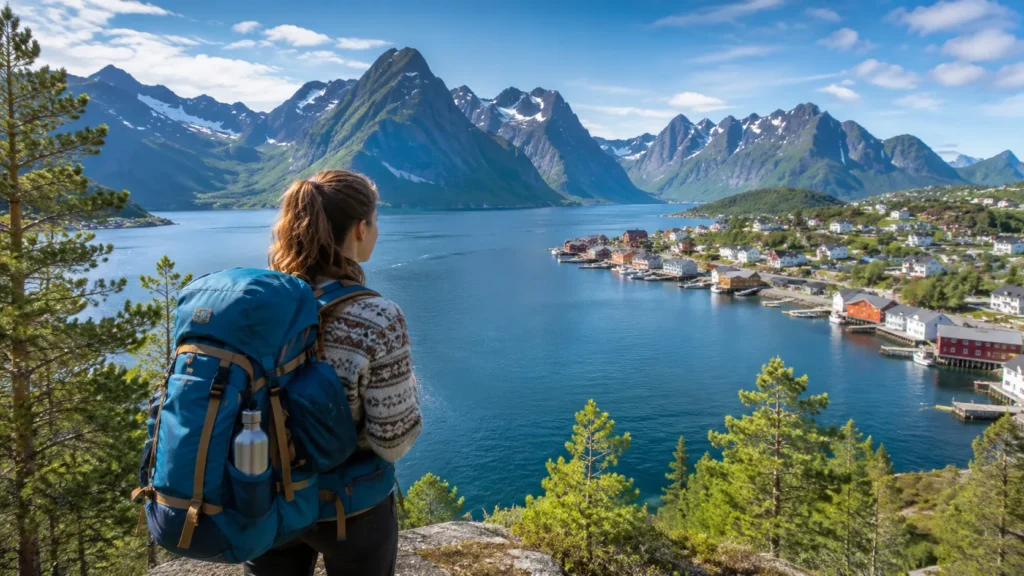
The summer travel map is being redrawn by heat, prices, and a new generation of backpackers who want fresh air without paying luxury-resort money for it. That is why Nordic coolcation travel is moving from a niche climate escape into a real backpacking route, especially for travelers who feel done with packed beaches, overheated dorm rooms, and peak-season cities that drain both energy and cash. The idea is simple but powerful: go north, stay light, sleep in hostels, move by public transport, and trade the pressure of classic summer tourism for forests, fjords, islands, lakes, saunas, and long daylight. For years, Scandinavia and the wider Nordic region were treated as dream destinations with scary price tags, but backpackers are now learning that the expensive reputation is only half the story. If you plan with the right route, choose hostel-friendly cities, cook some meals, and travel slower, the Nordic summer can feel less like a splurge and more like the smartest escape of the season.
Why Nordic Coolcation Travel Feels So Right Now
The rise of the coolcation is not just about wanting prettier weather photos or chasing a TikTok-friendly word. It comes from a real shift in how people think about summer travel, especially after repeated heatwaves made traditional European hotspots feel less relaxing and more like endurance tests. Backpackers are usually flexible, fast to adapt, and willing to try routes before they become mainstream, so it makes sense that they are among the first travelers to take northern summers seriously. Instead of building an entire trip around sunbathing, they are building trips around being able to walk all day, sleep comfortably at night, hike without melting, and actually enjoy the city they paid to visit. That makes a Nordic route feel practical, not just aesthetic, because comfort becomes part of the value equation.
There is also a deeper mood behind the trend, and it has a lot to do with burnout. Many young travelers do not want a holiday that feels like another crowded algorithm, where everyone stands in the same line, buys the same iced drink, takes the same sunset photo, and goes home tired. The Nordic version of summer travel offers a different rhythm, where the highlight might be swimming in a cold harbor pool, taking a ferry between islands, sharing pasta in a hostel kitchen, or hiking through pine forests under a sky that refuses to get dark. It feels slower, cleaner, and less performative, even when the cities themselves are modern, creative, and full of nightlife. For backpackers who want a trip that resets the nervous system without becoming boring, that balance is the hook.
The Budget Myth Around the Nordic Route
The biggest obstacle for most travelers is the belief that Nordic countries are automatically impossible on a backpacker budget. That reputation exists for a reason, because eating out, drinking, last-minute transport, and central hotels can get expensive quickly in places like Norway, Iceland, Sweden, Denmark, and Finland. But backpacking has never been about copying the spending pattern of a weekend luxury traveler, and that is where the story changes. Hostels, supermarket meals, city cards, overnight buses, ferries, refillable water bottles, free walking routes, public libraries, waterfront hangouts, and wild nature access can make the same destination feel radically different. The trick is not pretending the Nordics are cheap in the same way as Southeast Asia or the Balkans, but understanding that high prices can be managed when the biggest experiences are outdoors and low-cost.
A smart Nordic coolcation budget starts before the flight is booked, because route design matters more here than almost anywhere else in Europe. A traveler who jumps between four capital cities in one week, eats every meal in restaurants, and books weekend train tickets at the last second will absolutely feel the financial sting. But someone who stays longer in fewer places, uses hostels with kitchens, books transport earlier, explores nature on foot, and mixes capitals with smaller towns can stretch the same money much further. Even expensive cities have free museums on certain days, affordable bakery breakfasts, low-cost harbor swims, community events, and self-guided neighborhoods that feel rich without requiring a paid tour. In other words, the Nordics reward research, patience, and backpacker instincts.
Nordic Coolcation Routes Backpackers Can Actually Afford
The most budget-friendly way to approach the region is to stop thinking of it as one giant bucket-list destination and start thinking in smaller routes. Copenhagen to Malmö is one of the easiest entry points because it combines Denmark’s design-heavy capital with Sweden’s more relaxed, walkable, and often cheaper southern city. From there, backpackers can move deeper into Sweden, take trains toward Gothenburg, or build a slower coastal route with beaches, parks, and island day trips. This works especially well for first-time Nordic travelers because the distances are manageable, the hostel scene is active, and the cities offer plenty of free or low-cost things to do. It is also a strong option for anyone who wants the coolcation feel without immediately committing to remote wilderness.
Another strong route is Stockholm paired with Helsinki, connected by ferry and shaped by two very different city moods. Stockholm gives you islands, old-town lanes, lakeside walks, metro art, and easy day trips, while Helsinki brings sauna culture, calm design, Baltic air, public markets, and access to nearby islands. The ferry itself can become part of the backpacking experience if booked smartly, especially because overnight travel can sometimes replace one night of accommodation. This route is not always the absolute cheapest, but it gives a lot of atmosphere for the money because both cities are naturally built around water, walking, and public spaces. For travelers who care about architecture, culture, and soft adventure more than nonstop nightlife, it can feel like a clean upgrade from the overheated city-break formula.
Norway is the country that scares budget travelers the most, but it is also the country that can deliver the strongest coolcation payoff. Oslo can be expensive, yet it has an unusually good mix of free waterfront spaces, forest access, public transport, island ferries, and hostel options if booked early. The smarter move is to avoid treating Norway as a restaurant-and-hotel destination and instead focus on grocery stores, packed lunches, scenic trains, public ferries, and hikes that do not need a guide. Bergen, Trondheim, and smaller coastal towns can be added depending on time and budget, with each stop offering a different version of cool air and dramatic landscapes. For backpackers who are willing to plan carefully, Norway becomes less about spending big and more about choosing where the money actually matters.
The Iceland Question for Budget Backpackers
Iceland sits slightly outside the classic mainland Nordic route, but it is impossible to ignore in the coolcation conversation. The landscape is unreal, the air feels cinematic, and the contrast with overheated summer cities is almost immediate. However, Iceland is also one of the hardest places in the region to do cheaply, especially once transport, tours, and accommodation enter the picture. Budget backpackers can still make it work by staying in hostels, using shared tours selectively, cooking nearly every meal, focusing on Reykjavík plus one or two accessible nature routes, and avoiding a rushed checklist itinerary. The key is honesty: Iceland can be a backpacking dream, but it requires a tighter budget plan than Sweden, Finland, or Denmark.
Hostels Are the Secret Engine of This Trend
The coolcation trend would not be nearly as accessible without hostels, because they turn expensive northern cities into social and practical bases. A good hostel gives backpackers more than a bed; it gives them a kitchen, luggage storage, route advice, laundry, common areas, walking partners, and a chance to split costs with people heading in the same direction. This matters even more in Nordic destinations where eating out can destroy a daily budget faster than transport or attractions. A traveler who cooks breakfast, packs lunch, and joins hostel-made dinner plans can survive comfortably while still enjoying coffee shops, bakeries, saunas, or the occasional local meal. For a site focused on hostel guides, the Nordic coolcation is the perfect reminder that accommodation choice can shape the entire economics of a trip.
The new hostel culture also fits the emotional side of coolcation travel. Many backpackers choosing the north are not only escaping heat; they are also looking for a calmer version of social travel, where meeting people does not always mean loud party crawls or chaotic beach towns. Nordic hostels often lean into design, shared kitchens, sustainability, coworking corners, local events, bike rentals, and easy access to nature. That makes them attractive to solo travelers, remote workers, students, and slow travelers who want community without losing their personal space. The best hostel experience in this region is not just about the cheapest dorm, but about finding a base that helps you spend less while doing more.
How to Keep a Nordic Coolcation Budget Under Control
Budget control in the Nordics starts with food, because this is where careless spending becomes painful fast. Supermarkets, food halls, bakeries, hostel kitchens, and packed meals should be treated as part of the travel strategy, not as a compromise. A backpacker who buys oats, fruit, bread, cheese, pasta, soup ingredients, and snacks can save enough over a week to afford a sauna, a ferry, a museum, or a special local meal without guilt. Tap water is usually excellent, so reusable bottles are not just eco-friendly but genuinely useful for reducing daily costs. Once travelers accept that one restaurant meal a day is already a luxury in some cities, the budget becomes much easier to manage.
Transport is the next big piece, and the best approach depends on the route. Trains are comfortable and scenic, but they can be expensive when booked late, especially across long distances or popular summer corridors. Buses are often cheaper, ferries can double as transport and experience, and city public transport passes can make sense when the itinerary includes islands, suburbs, beaches, or forest access. Walking is also underrated in Nordic cities because many of the best moments happen between attractions, not inside them. If the goal is budget travel with atmosphere, then a slow route beats a packed route almost every time.
Timing can change everything, even within the same season. Peak summer brings the longest daylight, the warmest weather, and the biggest demand, which means dorm prices and transport costs can rise quickly. Shoulder periods in late spring and early autumn can still deliver cool air, strong city life, cheaper beds, and fewer crowds, though travelers should prepare for more variable weather. Even during peak summer, weekday stays can be cheaper than weekend stays in major capitals, especially when festivals, sports events, or cruise arrivals increase demand. Backpackers who are flexible with dates will often find the Nordic region more accessible than its reputation suggests.
What Backpackers Actually Do on a Nordic Coolcation
A strong Nordic coolcation does not need to be filled with expensive attractions. In Copenhagen, the day can start with a hostel breakfast, move through design districts and canals, pause at a bakery, and end with a harbor swim or a budget dinner in a shared kitchen. In Stockholm, a traveler can spend hours walking between islands, exploring viewpoints, riding public transport, and joining other hostel guests for a sunset by the water. In Helsinki, the rhythm might include market halls, public saunas, island ferries, quiet parks, and late-evening light that makes the city feel suspended in time. These experiences are not free because travel itself costs money, but they give more value per day than an itinerary built around constant paid entry.
Nature is the biggest advantage of this route, and it is also the reason the trend feels bigger than a normal city break. Nordic cities often sit close to forests, lakes, coastlines, islands, or trails, which means backpackers can shift from urban exploring to outdoor reset without booking a full adventure package. That accessibility matters for younger travelers who want the feeling of escape but may not have the gear, money, or confidence for hardcore expeditions. A simple day hike, a cold swim, a ferry ride, a picnic by a lake, or a forest walk can become the emotional highlight of the trip. This is where the Nordic coolcation becomes more than a weather strategy and starts feeling like a lifestyle choice.
The Weather Is the Feature, Not the Problem
Backpackers used to chase guaranteed heat because sunshine was treated as the universal measure of a successful summer trip. Now, cooler weather is becoming the selling point, especially for travelers who want to stay active during the day instead of hiding from the sun until evening. The Nordic summer can still be warm, bright, and lively, but it is usually easier to walk, cycle, hike, and sleep than in hotter southern destinations. Rain and wind are part of the package, so the smartest travelers pack layers, waterproof shells, quick-dry clothing, and shoes that can handle both city streets and trails. Once you plan for changeable weather instead of fighting it, the northern climate starts to feel like freedom.
The Social Shift Behind Coolcation Backpacking
There is a cultural shift happening inside backpacking, and the Nordic coolcation sits right in the middle of it. A lot of younger travelers are moving away from the idea that the best trip has to be the cheapest, loudest, or most chaotic. They still care about budget, but they also care about sleep, safety, sustainability, walkability, mental clarity, and the feeling that a place is livable rather than only photogenic. Nordic cities speak to that desire because they often combine public space, clean transport, design, nature access, and a slower public rhythm. The result is a version of backpacking that feels less like escape from responsibility and more like a preview of a better everyday life.
This does not mean the Nordics are suddenly replacing every classic budget route. Southern Europe, Eastern Europe, Southeast Asia, and Latin America still offer major value and deeper backpacker infrastructure in many places. But the coolcation trend adds another option for travelers who want to avoid extreme heat, rethink peak-season habits, or build a trip around climate comfort. It also gives hostel operators and travel planners a chance to create better routes for people who previously assumed the north was financially off-limits. For backpackers, the win is choice: summer travel no longer has to mean choosing between sweating through crowded hotspots or staying home.
Mistakes to Avoid on a Nordic Backpacking Route
The first mistake is trying to see too much too quickly, because distance and cost can punish an overpacked Nordic itinerary. A route that looks simple on a map may involve expensive transfers, long travel days, or awkward arrival times that force travelers into pricey last-minute choices. The second mistake is underestimating food costs and assuming casual meals will be priced like they are in cheaper parts of Europe. The third mistake is booking hostels too late, especially in summer, when the most affordable dorms in central locations can disappear early. A better strategy is to choose fewer bases, book key beds and transport ahead, and leave flexibility for day trips rather than major route changes.
Another common mistake is packing for Instagram summer instead of actual northern weather. A Nordic trip can include sunny afternoons, chilly evenings, rain, wind, and sudden temperature shifts, sometimes in the same day. Backpackers who bring only light beach clothing may end up buying overpriced layers or avoiding the outdoor activities that made the route attractive in the first place. The goal is not to overpack, but to pack smarter with layers that work across hostels, city walks, ferries, hikes, and casual nights out. When your bag supports the climate, the whole trip becomes easier and cheaper.
Why This Trend Could Keep Growing
The coolcation trend has room to grow because it solves several travel problems at once. It responds to hotter summers, overcrowded destinations, rising accommodation prices, and the desire for trips that feel healthier and less exhausting. It also fits the way backpackers already travel, because they are good at shared rooms, public transport, flexible plans, and finding value beyond polished tourist products. As more travelers share realistic Nordic budget routes, the region may feel less intimidating to people who once dismissed it as too expensive. The next stage will likely be more interest in secondary cities, regional hostels, ferry routes, and nature-adjacent stays that offer cool air without capital-city prices.
There is also a sustainability angle that will become harder to ignore. Travelers are starting to think not only about where they can afford to go, but also about whether their trip makes sense in a changing climate. A coolcation does not automatically become sustainable just because it happens in the north, especially if it involves unnecessary flights or rushed routes. But slower itineraries, train and ferry combinations, longer stays, and lower-consumption hostel travel can make the trend more thoughtful than the average heat-escape headline. For backpackers who want to travel with more awareness, the Nordic route offers a useful framework rather than a perfect answer.
Conclusion: Nordic Coolcation Is More Than a Trend
The reason Nordic coolcation travel matters is not only that the weather is cooler, the landscapes are beautiful, or the word itself sounds new. It matters because backpackers are changing the definition of a good summer trip, and the north fits that new definition surprisingly well. A good Nordic route can be social without being chaotic, active without being punishing, scenic without requiring luxury spending, and restorative without becoming dull. It asks travelers to plan better, spend more intentionally, and let nature do more of the work than paid attractions. For budget travelers willing to swap heat for fresh air and speed for rhythm, the Nordic coolcation is not just a backup plan for a hotter Europe; it is one of the smartest backpacking routes of the moment.