
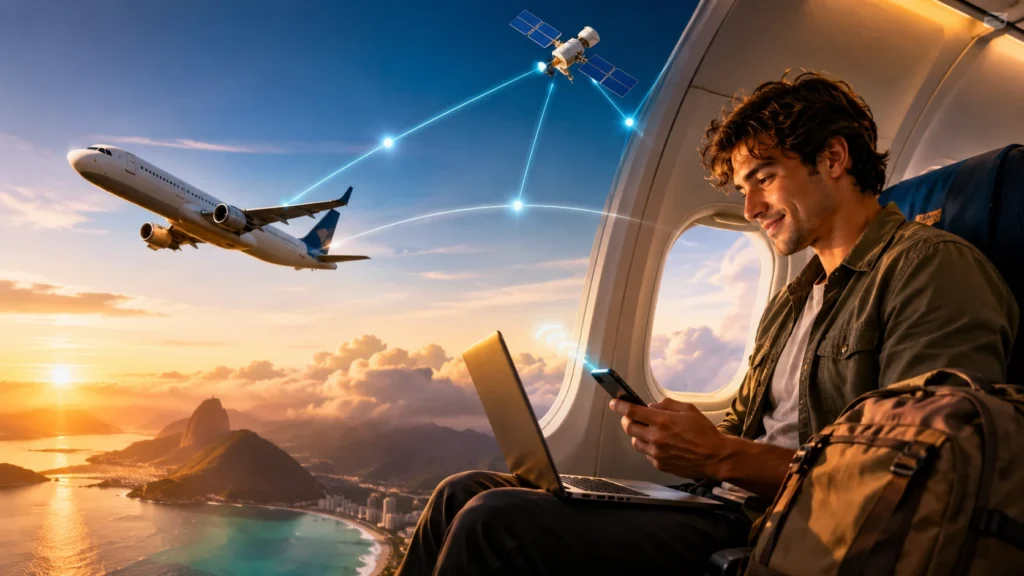
The old budget flight script has always been easy to recognize: cheap ticket, tight seat, basic service, and a quiet acceptance that anything beyond getting from point A to point B might cost extra. But Frontier Starlink is starting to rewrite that script in a way that feels bigger than one airline upgrade. When an ultra-low-cost carrier decides to bring fast satellite internet into the cabin, the conversation shifts from “how little can a cheap flight offer?” to “how much comfort can a budget traveler realistically expect?” For backpackers, digital nomads, students, weekend escape artists, and deal hunters, this is not just a tech headline floating above the clouds. It is a signal that the budget flight experience may be entering a new era where affordability and connectivity are no longer treated like opposite choices.
Why Frontier Starlink Feels Like a Budget Travel Plot Twist
For years, budget airlines built their identity around subtraction. Take away the checked bag, remove the free snack, shrink the frills, and let the base fare do the talking. That model worked because travelers understood the trade-off: spend less, expect less, and arrive with more cash left for the actual trip. Yet the arrival of Frontier Starlink suggests that the low-cost model is no longer only about cutting things down to the bone. Instead, airlines are realizing that modern travelers, especially younger ones, do not see internet access as a luxury in the same way previous generations viewed champagne service or lounge access.
This is why the move feels so interesting for the budget travel crowd. A backpacker flying across the country may not care about white-tablecloth dining at 35,000 feet, but they may absolutely care about being able to message a hostel, update a train booking, track a delayed connection, or finish freelance work before landing. The average traveler’s version of comfort has changed, and it now includes staying connected without fighting a weak signal or paying for slow browsing that barely loads a map. When a carrier known for keeping fares lean starts investing in satellite-powered Wi-Fi, it tells us the budget flight battlefield is moving. Price still matters, but experience is becoming part of the deal.
The Rise of Connected Low-Cost Flying
The phrase connected low-cost flying would have sounded almost contradictory not too long ago. Low-cost carriers were not usually where travelers looked for polished digital perks, because the whole point was to avoid paying for unnecessary extras. However, flight habits have changed alongside work habits, travel planning habits, and even entertainment habits. A traveler can now book a hostel from a phone, check visa rules from an airport seat, edit videos from a tablet, and handle a remote meeting while crossing time zones. In that reality, being offline for several hours can feel less like a break and more like a disruption.
This is where Frontier Starlink becomes more than an aircraft feature. It reflects how budget airlines are trying to stay relevant to travelers who want cheap fares but do not want to feel disconnected from the rest of their life. For backpackers, this could mean confirming a late check-in before landing in a city they have never visited. For remote workers, it could mean choosing a cheaper flight without losing half a workday. For families, it could mean fewer restless minutes when streaming, messaging, or basic browsing actually works. The cabin may still be simple, but the flight no longer has to feel completely cut off from the ground.
Why Fast Wi-Fi Matters More Than Free Soda
Airline comfort used to be judged by visible things: seat pitch, meals, entertainment screens, and whether the crew handed out drinks without asking for a card. Those details still matter, but many budget travelers are more practical than nostalgic. They would rather have a reliable connection than a tiny snack they forget five minutes later. They would rather send a message to a hostel host than scroll through a limited seatback movie library. The modern passenger experience is increasingly shaped by what travelers can do during the flight, not only by what the airline hands them.
That is why satellite internet carries emotional weight, even when it sounds technical. A strong connection can make a cramped cabin feel more manageable because passengers regain control over their time. They can plan, work, read, message, upload, check maps, or simply feel less isolated during the journey. For budget travelers, who often stitch together complicated itineraries with buses, hostels, discount flights, and flexible dates, that control matters a lot. A cheap ticket becomes more valuable when the hours spent in the air are not treated as dead time.
Frontier Starlink and the New Budget Flight Standard
The biggest question raised by Frontier Starlink is not whether passengers like fast Wi-Fi, because the answer is obvious. The more important question is whether budget airlines can add meaningful upgrades without losing the fare advantage that made them attractive in the first place. Ultra-low-cost carriers survive by being disciplined with expenses, charging separately for extras, and keeping operations efficient. Any new feature has to justify itself, either through direct revenue, stronger loyalty, better customer satisfaction, or a more competitive brand image. In that sense, Starlink is not just a passenger perk; it is a strategic bet on where the market is heading.
If the service is priced fairly, bundled smartly, or used to support loyalty programs, it could make budget flying feel less bare without turning it into a traditional full-service product. That balance matters because travelers are becoming more selective. Many people still want cheap flights, but they are also tired of feeling like every small convenience is missing. A low fare can attract attention, but a smoother experience can earn repeat bookings. For a brand like Frontier, adding high-speed in-flight internet can help reposition the airline from “cheap and basic” to “cheap but surprisingly useful.”
This is especially relevant because the line between budget and premium travel has become blurry. Full-service airlines now sell basic economy tickets that strip away flexibility, while low-cost carriers experiment with better seats, bundles, loyalty perks, and upgraded onboard features. Travelers are no longer choosing between two clean categories. Instead, they are comparing total value across fare types, add-ons, schedules, airport convenience, and onboard experience. In that messy comparison, Frontier Starlink Wi-Fi could become a small detail that changes how people judge a cheap ticket.
What This Means for Backpackers and Hostel Travelers
Backpackers have always been experts at turning inconvenience into strategy. They take the early flight, choose the secondary airport, sleep in dorm rooms, pack light, and accept a little chaos in exchange for seeing more places with less money. But today’s backpacker is not necessarily trying to disappear from the internet. Many are managing online bank cards, travel insurance apps, hostel confirmations, digital boarding passes, work messages, content uploads, and group chats that hold the whole trip together. When flight connectivity improves, the backpacking experience becomes easier in small but meaningful ways.
Imagine landing in a city late at night with your hostel’s reception hours changing at the last minute. With reliable in-flight Wi-Fi, you can handle that before touchdown instead of scrambling at baggage claim. Imagine trying to coordinate with other travelers you met in another city, but your layover is short and your next bus leaves soon after arrival. Being connected during the flight means you can make decisions earlier and move with less stress. For people who travel light and cheap, better information access can be just as valuable as extra legroom.
There is also a content angle that matters for a newer generation of travelers. Backpacking is no longer only something people do privately and remember through a dusty photo album. Many travelers document trips in real time through blogs, short videos, newsletters, and social posts. A better in-flight connection can help them back up footage, draft posts, answer comments, or plan the next piece of content while the journey is still happening. For readers who follow hostel guides and backpacking tips, this kind of shift changes what “travel day” can look like.
A Cheap Seat Can Still Be a Productive Seat
One of the most underrated parts of this change is productivity. A cheap seat used to mean accepting that flight time was mostly offline time, unless the airline offered paid Wi-Fi that worked well enough to justify the price. With more airlines moving toward faster satellite connections, even budget passengers may start thinking of flight hours differently. A student can polish an assignment, a freelancer can send deliverables, and a traveler can organize bookings without waiting for airport Wi-Fi. That turns the low-cost cabin into a more flexible space, even if the physical seat remains simple.
This does not mean every traveler wants to work in the sky, and honestly, some people will still prefer to disconnect completely. But having the option matters. Budget travel is built around options, whether that means choosing a cheaper flight time, skipping a bag fee, or staying in a dorm instead of a private room. Better Wi-Fi simply adds another layer of choice. The passenger can decide whether the flight is for rest, planning, entertainment, or catching up on life.
The Bigger Airline Trend Behind the Upgrade
Frontier Starlink is part of a much larger race happening across aviation. Airlines are competing not only on routes and fares, but also on the digital experience inside the plane. Satellite internet has become a hot category because passengers increasingly expect the sky to feel less disconnected from normal life. Low-Earth-orbit satellite networks promise lower latency and stronger performance than older systems, which is why more carriers are paying attention. The result is a cabin experience where browsing, messaging, and streaming may become less frustrating than travelers have come to expect.
For budget airlines, this trend creates pressure and opportunity at the same time. The pressure is obvious: if full-service carriers offer fast Wi-Fi as part of a loyalty-driven experience, low-cost airlines risk looking outdated if they stay completely offline. But the opportunity is just as real. A budget carrier that adds strong connectivity before its closest rivals can stand out without copying every expensive feature from legacy airlines. Instead of trying to become luxurious, it can become more useful.
That usefulness is the real story. Travelers are not always asking budget airlines to become fancy. They are asking them to become less annoying, more predictable, and better aligned with how people actually move through the world now. A smooth app, a clear fee structure, reliable boarding, reasonable seat choices, and fast Wi-Fi can do more for loyalty than a forced attempt at luxury. If budget flight upgrades focus on practical comfort rather than fake glamour, passengers are more likely to see the value.
Will Budget Flights Become More Expensive?
The concern many travelers will have is simple: upgrades usually cost money, and money has a way of finding its way back to the passenger. If installing satellite internet is expensive, travelers may wonder whether base fares will rise, add-on fees will expand, or Wi-Fi will become another paid layer in an already complicated booking process. That concern is fair because budget airlines are built on unbundling. A feature that feels exciting at announcement time can feel less exciting if it later becomes another checkout screen decision.
Still, the answer may not be as simple as “better Wi-Fi means higher fares.” Airlines can monetize connectivity in several ways, including loyalty sign-ups, sponsor partnerships, bundled fares, premium packages, or operational improvements behind the scenes. Better internet may also support crews, maintenance communication, and real-time service updates, which means it can carry value beyond passenger browsing. If those operational benefits help reduce friction, the airline may view connectivity as infrastructure rather than just a paid perk. For travelers, the best-case scenario is clear: keep the base fare competitive while making optional upgrades feel genuinely worth it.
This is where smart budget travelers need to stay alert. The cheapest ticket is not always the best deal if every useful feature gets added separately. At the same time, a slightly higher fare can be worth it if it saves time, reduces stress, or helps you stay productive. The real move is to compare the total trip cost, not just the headline fare. For hostel travelers and backpackers, that means checking baggage rules, seat fees, airport distance, Wi-Fi pricing, transit costs, and arrival times before deciding which flight is truly cheaper.
How Travelers Can Use Frontier Starlink Smarter
If Frontier Starlink becomes widely available across flights, travelers should treat it as a tool rather than just a novelty. The smartest use is not endless scrolling for the sake of it, but turning flight time into a planning buffer. Before boarding, travelers can prepare a list of tasks that benefit from connectivity, such as confirming hostel arrival details, checking local transit, downloading offline maps, messaging travel partners, reviewing visa reminders, or updating a budget tracker. Once airborne, the connection becomes part of the travel workflow instead of a random entertainment add-on.
This mindset is especially helpful for people traveling across multiple cities on a tight budget. Cheap trips often involve more moving parts than luxury trips because travelers are mixing buses, trains, low-cost flights, shared rooms, and flexible bookings. A reliable connection can prevent small issues from turning into expensive mistakes. If a flight delay affects check-in, you can message the hostel earlier. If a bus schedule changes, you can adjust before landing. If your card flags a transaction, you can deal with it before you are standing at a station with no patience left.
- Use in-flight Wi-Fi to confirm hostel check-in times before arrival.
- Compare airport transfer options while still in the air.
- Update your travel budget before the next city starts spending it for you.
- Message travel partners early if delays change the plan.
The key is to avoid assuming Wi-Fi will solve every travel problem. Even strong in-flight internet can vary depending on aircraft, route, weather, network load, and airline policy. Smart travelers still download important files before departure, keep screenshots of bookings, and save offline maps for arrival. Connectivity should be a bonus layer, not the only layer. The best backpacking strategy is always a mix of digital convenience and old-school backup planning.
Why This Matters for the Future of Cheap Travel
The future of cheap travel is not simply about finding the lowest possible fare. It is about finding the best value in a travel world where comfort, flexibility, and digital access matter more than ever. A generation raised on apps does not separate the journey from the online tools that make the journey manageable. They book rooms on the go, compare routes instantly, check reviews at midnight, and expect updates to move faster than airport announcement boards. In that world, a budget flight without decent connectivity can feel weirdly behind, even if the ticket price is attractive.
This does not mean every airline must offer a premium experience. In fact, budget travel would lose its soul if every carrier tried to become a luxury brand with a different logo. What matters is practical improvement. More reliable Wi-Fi, clearer pricing, better self-service tools, smarter loyalty perks, and fewer surprise fees can make low-cost flying feel more respectful without making it expensive. Frontier Starlink fits into that category because it targets a real pain point: the feeling of being digitally stuck while your trip keeps moving.
There is also a cultural shift happening here. Budget travelers are no longer seen as people who simply accept whatever is cheapest. They are strategic consumers who know how to compare value, stretch money, and decide which comforts are worth paying for. A backpacker may skip a hotel room but pay for mobile data. A student may fly at sunrise but choose a fare bundle that prevents stress. A digital nomad may book the cheapest seat but care deeply about whether the flight allows them to stay connected.
The Hostel Economy and the Connected Traveler
Hostels have already adapted to the connected traveler faster than many airlines. Modern hostels often promote coworking spaces, fast lobby Wi-Fi, social apps, digital check-in, WhatsApp groups, and community events designed around flexible travelers. The hostel guest is no longer just someone carrying a backpack and looking for the cheapest bed. They might be a remote worker, a creator, a student on break, a solo traveler building confidence, or a long-term wanderer trying to balance budget and lifestyle. Better budget flight connectivity supports that same ecosystem before the traveler even reaches the front desk.
When the flight becomes connected, the handoff between airline and hostel gets smoother. Travelers can update arrival times, ask about lockers, check whether reception is open, join a hostel group chat, or look up neighborhood safety tips before landing. This matters because many budget travelers arrive outside ideal hours, especially when chasing cheaper fares. A flight that lands late or at a secondary airport can create stress if communication breaks down. Fast in-flight internet helps reduce that gap between the air and the street.
For hostel operators, the trend also says something important about guest expectations. If travelers can get fast satellite internet on a budget flight, they will be less patient with weak Wi-Fi in a hostel common room. The standard rises everywhere once connectivity improves in unexpected places. Hostels that serve backpackers, remote workers, and budget travelers will need to treat internet quality as part of hospitality, not as a minor technical detail. In that sense, the airline upgrade may quietly push the whole budget travel industry forward.
Conclusion: Budget Flights Are Growing Up
Frontier Starlink matters because it captures a bigger change in how people define value while traveling. The budget flight of the future may still be simple, efficient, and fee-conscious, but it does not have to feel outdated. Travelers can accept a no-frills cabin more easily when the essentials match modern life, and fast internet is quickly becoming one of those essentials. For backpackers and hostel travelers, this kind of upgrade can turn flight time into planning time, work time, or simply calmer travel time. The sky may not become luxurious for everyone, but it can become a lot more useful.
The real win will depend on execution. If the service is reliable, priced sensibly, and rolled out in a way that supports the budget traveler instead of squeezing them, it could become one of the most meaningful low-cost airline upgrades in years. If it becomes another confusing add-on, travelers will judge it with the same sharp eye they use for baggage fees and seat charges. Either way, the message is already clear: cheap flights are no longer competing on price alone. With Frontier Starlink, budget travel is starting to climb into a more connected, more practical, and more interesting chapter.