
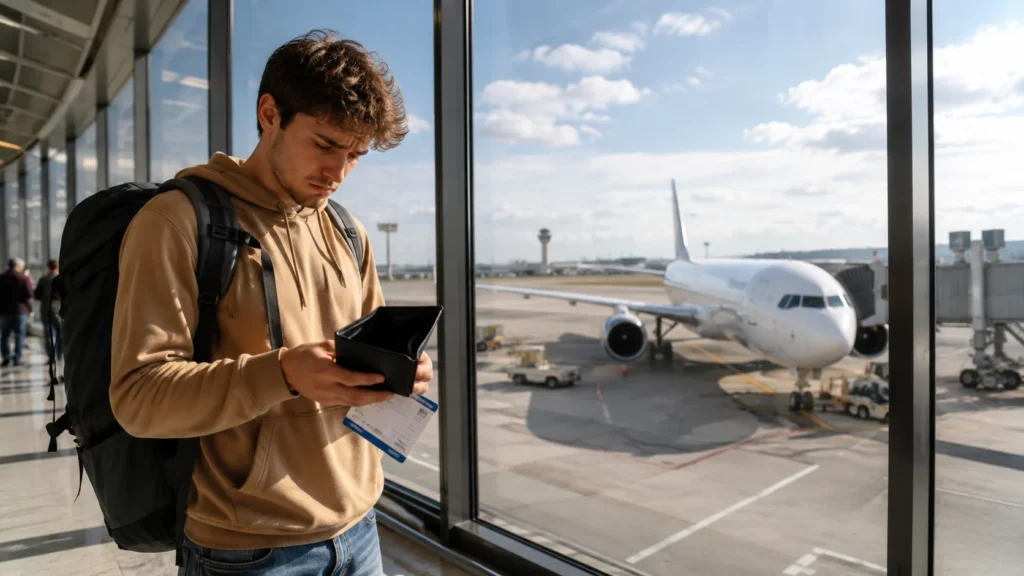
Travelers opening an airline booking app lately may feel like they are watching two completely different economies unfold at once. On one side, jet fuel prices have eased from earlier peaks, giving airlines some relief from one of their largest operating expenses. On the other side, ticket prices remain stubbornly high, especially on popular routes, during school holidays, and around major travel periods. This gap has turned high airfare into one of the most frustrating realities for budget-conscious travelers who expected cheaper fuel to produce cheaper flights. The logic seems simple from the passenger seat: when the cost of powering an aircraft falls, the price of sitting inside it should fall too.
Airline pricing, however, rarely follows such a clean line. A plane ticket is not priced like a bottle of water where the production cost largely determines the shelf price. It is priced through a constantly shifting mix of demand, competition, airport constraints, labor expenses, aircraft availability, and sophisticated revenue-management software. Fuel still matters, but it is only one piece of a much larger and more complicated puzzle. That is why travelers can see headlines about cheaper jet fuel while the checkout page continues to show fares that feel anything but affordable.
Why Cheaper Jet Fuel Does Not Guarantee Cheap Flights
Jet fuel is undeniably a major airline expense, and sudden increases can quickly pressure company finances. When fuel becomes more expensive, airlines often respond by raising fares, adding surcharges, reducing less profitable routes, or adjusting schedules to protect margins. Yet when fuel costs fall, the reverse process does not necessarily happen at the same speed. Airlines may use the savings to repair balance sheets, pay down debt, invest in new aircraft, or absorb increases in other operating costs. In other words, lower fuel prices can improve an airline’s financial position without immediately improving the price offered to passengers.
There is also a timing problem that most travelers never see. Many carriers do not buy all their fuel at the daily market price because they use hedging contracts to lock in costs months in advance. These agreements can protect an airline when prices rise, but they can also delay the benefits when market prices decline. A carrier may still be paying rates negotiated earlier even though current fuel benchmarks look cheaper. As a result, the lower cost visible in commodity markets may take time to appear in airline accounts, and it may never translate directly into lower ticket prices.
Even when an airline is benefiting from genuinely cheaper fuel, it has little incentive to cut fares if planes are already filling up. Airlines are businesses, not public transport charities, and their pricing teams are trained to charge what customers are willing to pay. If demand remains strong, seats are limited, and competitors are pricing at similar levels, dropping the fare would simply reduce revenue. The airline may instead keep the difference as additional profit or use it to cover expenses elsewhere. This is the central reason airfare stays high despite lower fuel costs: market demand often matters more than operating savings.
High Airfare Is Driven by Demand, Not Just Cost
The modern airline industry has become extremely skilled at measuring demand in real time. Booking systems track how many people search a route, how quickly seats are selling, which dates are attracting interest, and how close the departure date is. When the system detects strong demand, prices can rise even if nothing has changed about the actual flight. The aircraft, crew, and fuel requirement remain exactly the same, but the perceived value of the remaining seats increases. This approach allows airlines to maximize revenue from every departure rather than applying one fixed price to every passenger.
This explains why two people sitting next to each other may have paid dramatically different amounts. One traveler may have booked months earlier during a weak sales period, while another purchased the final available seat a few days before departure. Airlines divide cabins into multiple fare classes, each with its own price and restrictions, even though the physical seats may appear identical. As cheaper fare buckets sell out, the system moves customers into more expensive categories. The result is a marketplace where timing, flexibility, and demand signals often matter more than the cost of operating the plane.
Post-pandemic travel habits also changed the way demand behaves. Many consumers now prioritize experiences, family reunions, concerts, festivals, and international trips after years of disruption and uncertainty. Remote and hybrid work have also allowed some travelers to extend trips or travel outside traditional vacation patterns. This broader demand creates more competition for seats across more dates, not just during the classic summer peak. Airlines know that people are still willing to spend on travel, and that willingness supports higher prices.
Full Planes Give Airlines More Pricing Power
An airline becomes far more confident about maintaining high prices when most of its aircraft are flying close to full. A nearly sold-out flight creates urgency, especially when passengers have fixed plans and limited alternatives. Someone attending a wedding, starting a new job, or catching a cruise cannot easily postpone the journey simply because the fare increased. Airlines understand this urgency and price the remaining seats accordingly. Lower fuel costs do not change the fact that the final few seats on a busy route are highly valuable.
Capacity also remains constrained in many markets. Airlines cannot instantly add more flights whenever demand increases because they need aircraft, trained crews, airport slots, maintenance support, and regulatory approval. Aircraft delivery delays and engine inspections can reduce the number of planes available for service. Pilot shortages and training bottlenecks may further restrict expansion. When demand grows faster than available capacity, fares tend to stay elevated even if fuel becomes cheaper.
The Hidden Costs Keeping Airline Tickets Expensive
Fuel receives attention because it is easy to understand and regularly discussed in financial headlines, but airlines face many other expenses that have risen. Labor costs are a major example, particularly after pilots, cabin crews, engineers, and ground workers negotiated stronger contracts in response to inflation and staffing shortages. Airports have also increased charges in some regions to pay for infrastructure, security, and terminal improvements. Maintenance expenses can climb as aircraft age or replacement parts become harder to obtain. These pressures can absorb much of the money saved when fuel prices decline.
Aircraft ownership and leasing costs also play a significant role. Airlines often finance new planes through long-term agreements, and higher interest rates can make those arrangements more expensive. Carriers that lease aircraft may face increased rental payments when contracts are renewed. Insurance premiums, technology systems, cybersecurity, customer service operations, and compensation for disruptions all add to the total cost of running a network. A passenger sees only the seat, but the airline is pricing an entire ecosystem behind that seat.
Disruptions can be especially expensive. Severe weather, air traffic control restrictions, labor disputes, and mechanical issues may lead to canceled flights, hotel accommodations, meal vouchers, replacement crews, and repositioned aircraft. Airlines build some of this risk into their pricing because a profitable week can quickly be damaged by several days of operational chaos. Cheaper fuel does not remove those risks. In some cases, the savings are treated as a financial cushion rather than a reason to lower fares.
Competition Determines Whether Travelers See Savings
The number of airlines serving a route can be more important than the price of fuel. When several carriers compete aggressively between the same cities, they are more likely to launch promotions, match rival fares, and offer lower entry prices. When only one or two airlines dominate a route, passengers have fewer options and less bargaining power. A carrier with strong control over airport slots or regional connections can maintain higher fares because travelers may have no practical alternative. This is why the same distance can cost very different amounts depending on the route.
Low-cost carriers traditionally pressure full-service airlines by offering cheaper base fares and simpler operations. However, budget airlines also face rising wages, airport fees, maintenance costs, and aircraft shortages. Some have reduced routes that no longer meet profit targets, while others focus on airports where operating costs remain lower. When a low-cost competitor leaves a market, remaining airlines often gain more freedom to raise prices. For travelers interested in budget travel strategies, monitoring route competition can be just as important as watching seasonal sales.
Airline consolidation can further reduce downward pressure on fares. Mergers, partnerships, and joint ventures may create larger networks and smoother connections, but they can also weaken competition on certain routes. A market that appears to have several airline brands may still be influenced by shared pricing agreements or coordinated schedules. Passengers may see different logos while facing nearly identical prices. In that environment, cheaper fuel is unlikely to trigger a meaningful fare war.
Why Base Fares No Longer Tell the Whole Story
Even when airlines advertise a lower ticket price, the final cost may remain high because of additional fees. Checked baggage, cabin bags, seat selection, priority boarding, food, flexibility, and payment services can significantly increase the total. This unbundled model allows airlines to display an attractive base fare while collecting more revenue during the booking process. Travelers often do not realize the real price until they reach the final page. By then, they may feel too invested in the search to start over.
Ancillary revenue has become a central part of airline strategy rather than a small bonus. Carriers analyze which extras different passengers are likely to buy and adjust offers accordingly. A business traveler may pay for flexibility and priority services, while a family may spend more on baggage and seat selection. Budget travelers can avoid some extras, but only if they understand the rules and pack carefully. The cheapest advertised fare is therefore not always the cheapest practical journey.
This pricing structure also makes fare comparisons more difficult. One airline may include a cabin bag and standard seat selection, while another charges separately for both. A route that looks cheaper at first may become more expensive once essential add-ons are included. Travelers need to compare the final trip cost rather than the first number shown in search results. That means calculating transport to the airport, baggage fees, food, seat charges, and the risk of restrictive change policies.
What High Airfare Means for Backpackers
Backpackers feel the impact of expensive flights more sharply because airfare often represents the largest single cost of a trip. Accommodation can be managed through hostels, shared rooms, overnight transport, or longer stays, but the initial flight may be impossible to avoid. When airfare rises, travelers often shorten their journeys, visit fewer countries, or choose destinations closer to home. Some shift their budget away from activities and food to cover transportation. The result is a trip that may still happen but feels more restricted once the traveler arrives.
High fares can also change the geography of backpacking. Destinations served by multiple low-cost airlines become more attractive, while places with limited connections may lose budget travelers. Secondary cities can benefit when flights are cheaper than those into famous capitals. Travelers may land in one country and continue overland by train or bus to avoid expensive regional flights. This creates new routes and encourages slower travel, which can sometimes lead to richer experiences.
Hostels also feel these changes indirectly. When travelers spend more on flights, they become more price-sensitive about accommodation and may choose dorm beds over private rooms. They may stay longer in one property to secure weekly discounts or avoid repeated transport costs. Some travelers book refundable rooms while waiting for airfare to drop, creating uncertainty for hostel operators. Others choose destinations based on the combined cost of flights and accommodation rather than the appeal of the destination alone.
How Travelers Can Respond to Expensive Flights
Travelers cannot control airline pricing, but they can improve their chances of finding a manageable fare. Flexibility remains the most powerful advantage because flying one or two days earlier can sometimes produce a meaningful difference. Midweek departures may be cheaper than weekend flights, although this varies by route and season. Searching nearby airports can also reveal alternatives, especially in regions with strong rail or bus networks. The key is to compare the total journey rather than chasing the lowest ticket without considering ground transport and extra fees.
Booking early can help on routes with predictable demand, but there is no universal perfect window. Airlines constantly update fares, and waiting for a dramatic last-minute discount is increasingly risky on popular flights. Setting price alerts allows travelers to observe the normal range and react when a reasonable fare appears. It is often better to book a fair price that fits the budget than to gamble for the absolute lowest number. The emotional cost of checking the same route every day can become its own form of travel stress.
Travelers should also separate the ticket price from the trip value. A slightly more expensive direct flight may save a night in a hotel, reduce baggage charges, and avoid a long airport transfer. A cheaper itinerary with two connections may create higher food costs and a greater risk of missed flights. Budget travel is not always about choosing the smallest number at the top of the screen. It is about minimizing the total cost while protecting time, energy, and flexibility.
Slow Travel Can Offset High Flight Costs
One of the most practical responses to expensive airfare is to travel less frequently but stay longer. A high flight cost feels more reasonable when spread across several weeks rather than a three-day break. Longer trips also allow travelers to use weekly hostel rates, cook more meals, and rely on slower transportation. Instead of flying between every destination, they can build an overland route using trains, buses, and ferries. This approach reduces the number of tickets required and creates a more relaxed rhythm.
Slow travel also changes the mindset behind budget planning. Rather than collecting destinations, travelers focus on spending meaningful time in fewer places. They learn local transport systems, discover affordable restaurants, and build routines that reduce daily costs. The savings may not completely erase an expensive international flight, but they can protect the overall budget. More importantly, the journey becomes less dependent on constantly buying another ticket.
Will Airfare Eventually Fall?
Lower fuel costs can eventually contribute to cheaper tickets, but only when other conditions support that outcome. Airlines may reduce fares if demand weakens, more aircraft enter service, or competitors add capacity on key routes. Economic uncertainty can also encourage promotions if consumers become more cautious about discretionary spending. However, a broad and immediate decline should not be assumed simply because fuel is cheaper. The airline industry responds to the balance between available seats and willing passengers, not to one expense in isolation.
Future capacity will be especially important. If manufacturers deliver more aircraft and maintenance problems ease, airlines may be able to expand schedules. New routes and additional frequencies would give passengers more options and could create stronger competition. Yet growth may remain uneven because major airports have limited slots and infrastructure constraints. Travelers on popular or restricted routes may continue paying high prices even if the wider market becomes more affordable.
Consumer behavior will matter as well. As long as people continue prioritizing travel and paying premium prices, airlines have little reason to offer major reductions. A noticeable change is more likely when planes begin departing with more empty seats. That is the moment when discounting becomes useful to airlines rather than merely generous to travelers. Until then, fuel savings are more likely to strengthen profits than trigger a widespread wave of cheap tickets.
Conclusion: High Airfare Is Bigger Than Fuel
The persistence of high airfare during a period of cheaper jet fuel may seem unfair, but it reflects how modern airline economics actually works. Fuel is important, yet fares are shaped more directly by demand, capacity, competition, labor costs, aircraft availability, and revenue-management systems. When flights are full and travelers remain willing to pay, airlines can maintain higher prices regardless of savings at the fuel pump. That reality is unlikely to disappear soon, especially on busy routes with limited competition. Travelers therefore need to plan around the market rather than expecting lower fuel prices to automatically deliver cheaper seats.
For backpackers and budget travelers, the best response is not to abandon travel but to become more strategic. Flexible dates, alternative airports, realistic price alerts, lighter packing, and longer stays can reduce the damage caused by expensive flights. Comparing the full journey cost is more useful than focusing on a promotional headline or a low base fare. The era of simple airfare may be over, but informed travelers still have room to make smart choices. Cheaper jet fuel may not be lowering ticket prices yet, but better planning can still keep the journey within reach.