
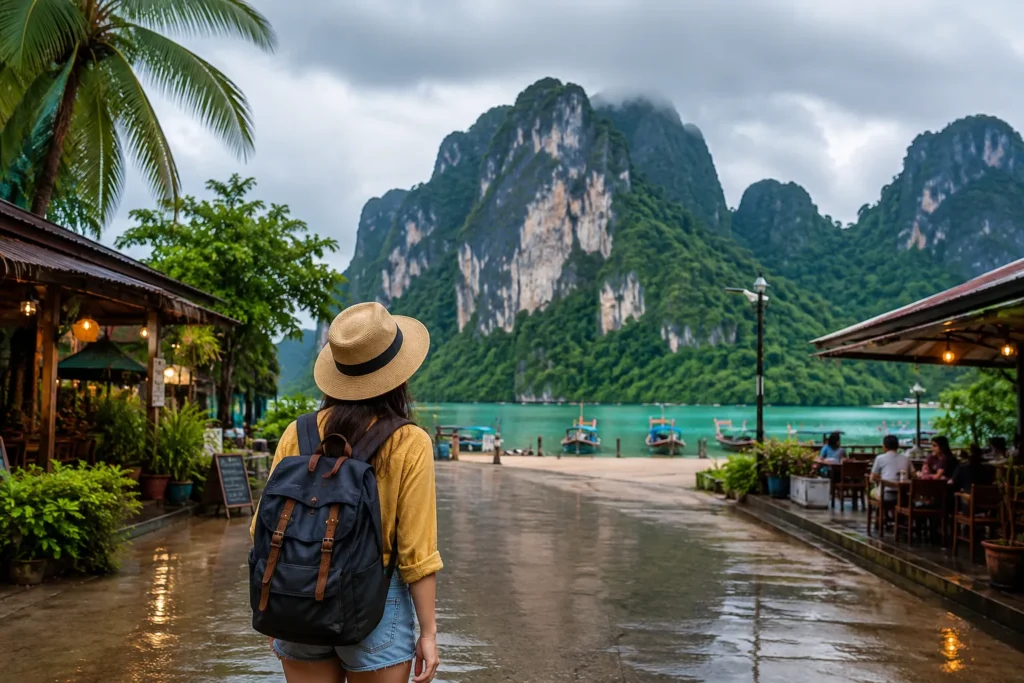
The first thing budget travelers learn about Thailand is that timing can change everything, and Thailand low season travel is where the whole map starts to feel unlocked. The same beaches, night markets, temple towns, hostel rooftops, and island ferries that feel expensive and crowded in peak months can suddenly become calmer, cheaper, and easier to explore when the rain clouds arrive. For backpackers, that shift is not just about saving a few dollars on a dorm bed. It is about moving through the country with more space, more flexibility, and more room for the kind of spontaneous travel stories that usually do not happen when every room is booked and every viewpoint is packed. Thailand’s low season has always carried a rainy-season reputation, but the smarter conversation now is about value, timing, and how to travel around the weather instead of running from it. In a year when travelers are watching every expense more closely, Thailand’s quieter months are starting to look less like a compromise and more like a cheat code.
Why Thailand Low Season Travel Feels Different Now
Thailand’s low season usually runs through the wetter stretch of the year, roughly from May to October, although the exact rhythm changes by region. That detail matters because the rainy season is not a single dramatic movie scene where the sky stays gray all day and every trip gets washed out. In many popular areas, rain often arrives in bursts, especially later in the day, leaving mornings and early afternoons surprisingly usable for temple walks, street food missions, cafe hopping, scooter rides, and hostel-led activities. This is why experienced backpackers rarely see the low season as a complete shutdown. They see it as a slower, softer version of Thailand, where the same destinations still exist but the pressure around them drops. When you are traveling on a tight budget, that slower pace can be the difference between rushing through a place and actually getting to know it.
The biggest change is the way prices start to bend in the traveler’s favor. Dorm beds, private hostel rooms, guesthouses, and even boutique stays often become more negotiable or more affordable outside the busiest months. Flights within Southeast Asia can also become easier to compare when demand softens, especially for travelers who are flexible with weekdays, airports, and route combinations. Backpackers who are not tied to school holidays or fixed vacation windows can stretch their budget further by building a route around the cheapest available dates rather than forcing the cheapest dates to fit a rigid route. That flexibility is one of the classic backpacker superpowers, and Thailand rewards it heavily in low season. Instead of spending more to chase perfect weather, you can spend less and use planning skills to work with imperfect weather.
The New Budget Logic Behind Rainy Season Thailand
The old travel rule was simple: go to Thailand in the dry season if you want the best experience. That advice still makes sense for travelers who want predictable sunshine, packed beach days, and a clean vacation schedule. But backpackers often measure a trip differently, because the goal is not always perfection. The goal is often connection, affordability, movement, and the feeling that the country is revealing itself without being filtered through peak-season crowds. In that context, rainy season Thailand becomes less of a problem and more of a trade-off. You accept some wet afternoons, occasional transport changes, and maybe a few canceled boat plans in exchange for cheaper beds, easier bookings, shorter lines, and a travel rhythm that feels more local than performative.
This is where low season starts to become powerful for the modern backpacker. Travel costs have become a bigger part of the decision-making process, and younger travelers are more willing to remix the old dream itinerary if it means staying on the road longer. Instead of asking whether Thailand is perfect in low season, the better question is whether the value is strong enough to make the trade worth it. For many hostel travelers, the answer is yes, especially when the trip focuses on cities, food, culture, wellness, language exchange, and slow travel rather than only postcard-blue beach days. Bangkok still has its food alleys, rooftop hostel hangouts, and creative neighborhoods. Chiang Mai still has temples, coffee shops, cooking classes, and mountain escapes, even if you need to plan around showers. The country does not disappear when the rain arrives; it just asks you to travel with more awareness.
Hostels Become the Real Low-Season Advantage
Hostels are already central to the Thailand backpacking circuit, but they become even more important during the low season. When the weather is unpredictable, a good hostel is not just a place to sleep; it becomes your travel control room. The best ones help guests read the local rhythm, adjust day plans, join group activities, find cheap transport, and avoid wasting money on trips that do not make sense in bad conditions. A social hostel in Bangkok might turn a rainy evening into a food crawl. A Chiang Mai hostel might recommend a morning hike instead of an afternoon scooter loop. A hostel on an island might know which beaches are still calm, which ferries are reliable, and which tours are worth skipping until the sea settles.
This is why hostel choice matters more in low season than many travelers expect. A cheap bed is useful, but a cheap bed in a disconnected, empty, poorly managed place can make the trip feel lonely when the weather gets messy. On the other hand, a slightly better hostel with strong common areas, helpful staff, laundry access, flexible booking, and honest local advice can save money across the whole trip. It can keep you from overpaying for taxis, booking bad tours, or moving to the wrong island at the wrong time. For readers browsing hostel guides, the low-season mindset should be simple: do not choose only by price, choose by usefulness. In Thailand’s quieter months, the right hostel can become the difference between a trip that feels disrupted and a trip that feels cleverly improvised.
Dorm Beds, Private Rooms, and the Upgrade Game
One underrated low-season move is checking whether a private room is suddenly within reach. During peak season, the gap between a dorm bed and a private room can feel too wide for a backpacker budget. During low season, that gap sometimes shrinks enough to make an occasional upgrade realistic, especially in smaller towns or less crowded islands. This does not mean abandoning hostel life, because social dorms and shared kitchens remain part of the backpacker experience. It means using the season strategically, choosing dorms when you want community and private rooms when you need rest, work time, or a reset after long bus rides. That kind of flexible accommodation strategy is one of the easiest ways to make Thailand feel comfortable without losing the budget edge.
The upgrade game also matters for digital nomads, long-term travelers, and backpackers building content or remote work around their trip. Low season can make weekly or monthly stays more realistic, especially when properties prefer steady occupancy over empty rooms. A traveler who plans to stay in Chiang Mai for two weeks, Bangkok for ten days, or Koh Samui for a slower island stretch may find better value by messaging directly, comparing platforms, and asking about longer-stay pricing. The key is to stay respectful and realistic, because not every place will negotiate and not every cheap deal is worth it. Still, low season creates more room for conversation than peak season ever does. When demand is softer, backpackers with flexible plans often gain leverage simply by being easy, polite, and ready to book.
Where Backpackers Should Go in Thailand’s Low Season
The best Thailand low-season route depends on what kind of trip you want, but cities are usually the safest starting point. Bangkok works in almost any weather because the city runs on food, malls, markets, temples, nightlife, trains, cafes, galleries, and neighborhoods rather than a single outdoor activity. A rainy afternoon in Bangkok can still become a noodle crawl, a museum stop, a cinema break, a massage session, or a hostel lounge conversation that turns into tomorrow’s plan. Chiang Mai is another strong low-season base because it gives backpackers culture, food, coworking spaces, night markets, and access to nature without forcing every day to be a full outdoor mission. Even when rain interrupts a plan, the city still has enough layers to keep the trip moving.
Island planning requires more attention, but it can still work beautifully if you respect the regional differences. The Andaman side, including places like Phuket, Krabi, Koh Lanta, and Koh Phi Phi, can be more affected during certain wet-season windows, with rougher seas and occasional disruptions. The Gulf side, including Koh Samui, Koh Phangan, and Koh Tao, may have a different pattern, making it worth comparing conditions before locking in ferry-heavy plans. Backpackers should avoid treating Thailand’s islands as interchangeable during low season, because one coastline can feel manageable while another feels less reliable. The smarter move is to keep the island portion flexible, check local conditions close to departure, and avoid booking every ferry, tour, and room too far ahead. In low season, freedom is not just romantic; it is practical.
Bangkok as the Low-Season Launchpad
Bangkok is often the first stop, but in low season it becomes more than a landing point. It is the place where you can recover from jet lag, compare routes, test your budget, and decide whether the weather is pushing you north, south, or somewhere slower. Hostels around transit-friendly areas can make a huge difference because they reduce taxi spending and keep you connected to trains, buses, and airport links. The city also gives backpackers one of the best food-value ratios in the world, from street stalls and mall food courts to late-night markets and neighborhood noodle shops. When rain rolls in, Bangkok does not ask you to stop traveling. It simply moves the adventure indoors, under awnings, through train stations, and into places you might have skipped on a perfect beach day.
For budget travelers, Bangkok also works as a reset button between more intense routes. If an island stay gets too wet, a few city nights can save the mood without destroying the budget. If a northern loop feels too slow, Bangkok can reconnect you to buses, trains, domestic flights, and other backpackers planning similar moves. This makes the city especially useful for first-time travelers who are still learning how Thailand functions in real time. You do not need to decide the whole trip before you arrive. You can land, sleep, talk to people, watch the forecast, compare prices, and build the next step with better information than you had from home.
How to Build a Smarter Budget Travel Route
The best low-season Thailand route is not the one that tries to see everything. It is the one that leaves enough space for the weather, your energy, and the deals that appear along the way. A common mistake is copying a peak-season itinerary and expecting it to perform the same way during rainy months. That can lead to frustration, especially if the plan depends on perfect ferry connections, daily tours, or nonstop beach weather. A better approach is to build the trip around strong bases, short travel jumps, and backup activities that still feel rewarding. This is where budget travel tips become less about being cheap and more about being adaptive.
Start with two or three anchor destinations instead of eight rushed stops. For example, a traveler might choose Bangkok, Chiang Mai, and one island area, then leave the final week flexible. Another backpacker might focus on Bangkok, Ayutthaya, Kanchanaburi, and Chiang Mai for a culture-heavy route with fewer weather-sensitive beach plans. Someone who really wants island time can still do it, but should choose the side of the country carefully and avoid prepaid, nonrefundable commitments when conditions look uncertain. This kind of route planning makes the trip feel calmer, and calm is valuable when traveling on a budget. Every unnecessary transfer costs money, energy, and sometimes a full day of the trip.
Transport Choices That Keep Costs Under Control
Thailand’s transport network is one reason backpackers keep returning, but low season makes smart transport choices even more important. Overnight buses and trains can save one night of accommodation, but they also require realistic expectations about comfort and arrival times. Domestic flights can be cheap if booked at the right moment, yet baggage fees and airport transfers can erase some of the savings. Minivans are useful for regional jumps, but they can feel tiring if the route is packed too tightly. The best strategy is not always choosing the cheapest option on paper. It is choosing the option that protects your budget, time, sleep, and ability to enjoy the next destination.
Rain also changes how travelers should think about local movement. Walking across a city with a backpack in dry weather is one thing, but doing it during a sudden downpour is another. This does not mean taking taxis everywhere, because that can burn cash quickly. It means staying closer to transit, carrying a light rain layer, using waterproof packing cubes or dry bags, and giving yourself buffer time on transfer days. It also means avoiding dramatic last-minute connections when ferries, buses, or storms are involved. A good low-season traveler is not paranoid, but they are not careless either. They build small margins into the day, and those margins prevent expensive mistakes.
Thailand Low Season Travel for Food, Culture, and Slow Days
One reason Thailand low season travel works so well is that the country’s strongest experiences are not limited to sunshine. Food culture is the obvious example, because Thailand’s street food, local restaurants, markets, and night snacks remain a daily adventure in almost any weather. A rainy evening can make a bowl of boat noodles, a plate of pad kra pao, or a coconut dessert feel even more memorable. Cultural travel also holds up well, especially in places with temples, old towns, museums, craft workshops, cooking classes, and local festivals. When the beach is not the whole point, the season becomes less intimidating. In fact, it can push backpackers into a richer version of the trip.
Slow travel is another natural fit for low season. Instead of sprinting from one attraction to another, backpackers can settle into a neighborhood and notice smaller details. They might learn which food stall has the longest local line, which cafe turns into a coworking corner during rain, or which hostel guests are heading to the same next stop. This slower rhythm often creates better travel stories than a packed checklist. It also helps the budget because staying longer in fewer places usually reduces transport costs and opens the door to weekly accommodation deals. Thailand’s low season encourages exactly that kind of travel. It rewards people who are curious enough to stay, observe, and adjust.
The Social Side of Cheaper Travel
Backpacking is never only about money, even when money is the thing that makes the trip possible. The social side matters, especially for solo travelers who choose hostels because they want instant community. Low season can make that community feel different. In some destinations, hostels may be quieter, which can be peaceful or awkward depending on the traveler and the property. In other places, the smaller crowd creates faster friendships because everyone ends up sharing the same common room, the same rain delay, or the same last-minute plan. The key is to choose hostels with recent reviews that mention atmosphere, not just cleanliness or price.
Group activities are especially useful during wetter months because they remove some planning friction. A hostel dinner, walking tour, cooking class, bar crawl, Muay Thai night, temple outing, or market run can turn a low-energy day into a social one without requiring a perfect itinerary. For solo backpackers, these activities also reduce costs because shared rides, group bookings, and local recommendations can keep spending lower than doing everything alone. This is where low season can quietly become more personal than peak season. With fewer people rushing through, conversations get longer and plans get more flexible. Travel stops feeling like a crowded conveyor belt and starts feeling like a network of small decisions made with people you just met.
What Backpackers Should Watch Out For
Low season is a strong opportunity, but it is not magic. Backpackers still need to understand the risks, because pretending they do not exist can turn a cheap trip into an expensive headache. Some island businesses may reduce hours, certain tours may run less often, and rough seas can affect ferry schedules or water activities. Trails can be muddy, waterfalls can be powerful, and scooter roads can become more dangerous after rain. This is not a reason to avoid Thailand, but it is a reason to avoid overconfidence. A cheap scooter rental is not a good deal if the road conditions are poor and the traveler is inexperienced.
Travel insurance also deserves attention, especially for backpackers who plan to ride scooters, dive, trek, or move between islands. Many budget travelers try to cut insurance first because it feels invisible when nothing goes wrong. That logic can collapse quickly if a storm disrupts transport, a bag gets soaked, a phone dies, or a minor injury becomes a clinic visit. Low-season travel rewards flexibility, but flexibility works better when the basics are protected. The same applies to packing. A waterproof phone pouch, quick-dry clothing, sandals with grip, a lightweight rain jacket, and a simple dry bag can prevent daily annoyances from turning into real problems.
The Trend: Backpackers Are Choosing Value Over Perfection
The bigger trend behind Thailand’s low-season appeal is a shift in how younger travelers define a good trip. For a long time, the travel internet sold perfection: perfect weather, perfect beaches, perfect hotel views, perfect itineraries, and perfect photos. Backpackers were always partly outside that system, but now more travelers are openly choosing value, flexibility, and authenticity over a polished version of escape. Thailand fits that shift because the country offers many layers at many price points. You can go ultra-basic with dorms and street food, mid-range with private hostel rooms and trains, or selectively splurge on a nicer stay when low-season discounts make it possible. That range gives budget travelers control, which is becoming more important than luxury.
This trend also changes how destinations should be understood. Low season does not simply mean fewer tourists; it can mean a different relationship between travelers and places. Restaurants have more space, hostel staff have more time, local transport feels less overloaded, and travelers can move without competing for every seat, bed, and viewpoint. For communities, spreading tourism beyond peak months can also create steadier demand, although that only works when travelers behave respectfully and spend locally. Backpackers should not treat cheaper destinations as disposable. The best version of budget travel still supports small guesthouses, local food vendors, independent guides, and neighborhood businesses.
How to Make the Most of Thailand Low Season Travel
The practical formula for Thailand low season travel is simple, but it requires discipline. Book the first few nights, not the whole month. Choose social hostels with strong recent reviews. Keep island plans flexible until you understand the weather pattern. Pack for rain without packing like you are moving abroad. Use mornings for outdoor plans and save indoor activities for later in the day. Most importantly, stop treating rain as failure. In Thailand, a rainy afternoon can become the moment you discover a food court, meet a future travel friend, learn a few Thai phrases, or finally rest after pretending you had unlimited energy.
Budgeting should also be built around categories, not wishful thinking. Accommodation, food, transport, activities, laundry, SIM data, insurance, and emergency buffer all deserve a place in the plan. Thailand can be affordable, but it is still easy to overspend when every smoothie, taxi, tour, and night out feels small in the moment. Low season gives you an advantage, but it does not replace basic tracking. A backpacker who saves on accommodation but burns money on last-minute transport may not actually come out ahead. A smarter traveler uses the season’s discounts to create breathing room, then protects that room by making steady daily choices.
Conclusion: Thailand’s Quieter Season Is the Smart Backpacker Move
Thailand’s low season is not the flawless fantasy version of travel, and that is exactly why it can be so rewarding. It asks backpackers to be flexible, weather-aware, and honest about what they actually want from the journey. In return, it offers cheaper stays, calmer destinations, easier bookings, deeper hostel connections, and a version of Thailand that feels less crowded by expectation. For travelers who care more about stories than perfect conditions, Thailand low season travel can become one of the smartest ways to experience the country on a realistic budget. The rain may change the plan, but it does not have to ruin the trip. Sometimes, it is the reason the trip becomes more memorable in the first place.