
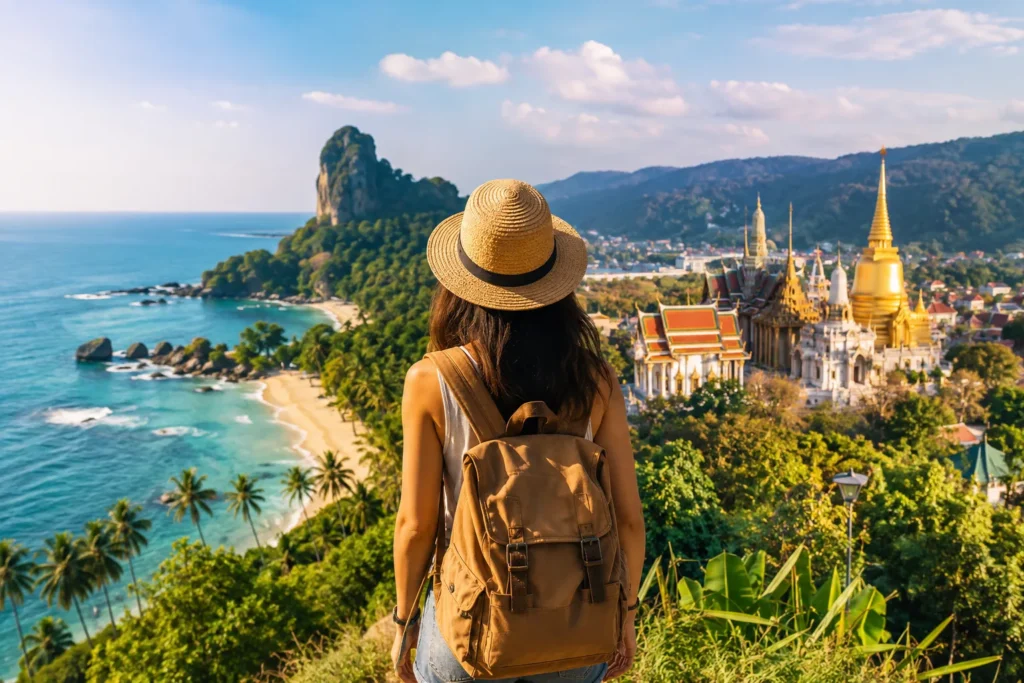
There is a specific kind of freedom that hits different when your backpack is light, your plans are flexible, and your bank account is not screaming for help. That is why budget solo travel Sri Lanka Thailand has become such a tempting route for travelers who want something bigger than a quick vacation but cheaper than a polished resort escape. Sri Lanka gives you slow train rides, surf towns, jungle edges, tea hills, and beach sunsets that feel cinematic without demanding a luxury budget. Thailand brings the energy in another direction, with street food, island hopping, hostel culture, night markets, temples, and a travel network that makes solo movement feel surprisingly easy. Put both countries together, and you get a route that is affordable, social, scenic, and emotionally rich enough to make a solo trip feel less like running away and more like meeting yourself somewhere new.
Why Sri Lanka and Thailand Make Sense for Solo Travelers
Sri Lanka and Thailand are different in rhythm, but that difference is exactly what makes them powerful as a combined solo travel idea. Sri Lanka feels smaller, softer, and more compact, which helps first-time solo travelers ease into the road without being overwhelmed by endless choices. Thailand, on the other hand, is a classic backpacker heavyweight, with routes that have been shaped for decades by travelers moving between Bangkok, Chiang Mai, Pai, Krabi, Phuket, Koh Tao, Koh Phangan, and countless smaller stops. For someone traveling alone, that infrastructure matters because it means there are hostels, buses, trains, ferries, cheap food spots, laundry shops, SIM cards, and casual travel friendships waiting almost everywhere. The result is a journey where Sri Lanka can feel like the emotional opening chapter, while Thailand becomes the louder, more social second act.
The appeal also comes from how both countries let you control your spending without stripping the trip of meaning. You can sleep in dorm rooms, eat local meals, use public transport, and still have days that feel full rather than limited. A cheap day in Sri Lanka might include a local breakfast, a bus ride through green hills, a beach walk, and a hostel dinner with people you just met that morning. A cheap day in Thailand might mean mango sticky rice, a temple visit, a scooter ride if you are confident and licensed, a sunset viewpoint, and a night market meal that costs less than a coffee in many Western cities. This is why budget travel in these countries does not feel like punishment; it feels like choosing the version of travel that keeps you closest to the street, the people, and the real texture of the place.
Budget Solo Travel Sri Lanka Thailand: The Real Vibe
The phrase budget solo travel Sri Lanka Thailand sounds practical, but the real experience is much more layered than a spreadsheet of hostel prices and bus tickets. Solo travel in this region often starts with a little uncertainty, especially if you are landing in Colombo or Bangkok without a fully locked itinerary. Then the rhythm begins to build as you figure out local buses, hostel common rooms, rice-and-curry plates, temple etiquette, and the quiet confidence that comes from solving small problems by yourself. Sri Lanka tends to reward patience, because travel can be slow, roads can be winding, and the best moments often happen between destinations rather than at the destination itself. Thailand rewards curiosity and flexibility, because there is always another town, island, market, cooking class, dive school, or mountain road waiting once you realize your plan can change.
What makes this route especially strong for Gen Z and younger millennial travelers is the balance between affordability and identity. People are not only looking for cheap flights and hostel beds anymore; they are looking for stories that feel personal, experiences that look good without being fake, and destinations that allow independence without total isolation. Sri Lanka gives that through its landscapes, from Ella’s misty hills to Mirissa’s ocean mood and the cultural depth around Kandy or Anuradhapura. Thailand gives it through movement and variety, from the chaos of Bangkok to the calm of northern mountains and the beach-life fantasy of the south. Together, they create a solo route that can be reflective, social, messy, beautiful, and budget-aware all at once.
Starting in Sri Lanka: Slow Travel on a Smaller Budget
Sri Lanka is a smart place to begin because it teaches you to slow down before Thailand speeds everything up. Many solo travelers start around Colombo or Negombo, not because those are the dreamiest stops, but because they are practical entry points after a flight. From there, the route can move toward Kandy, Ella, Nuwara Eliya, Arugam Bay, Mirissa, Weligama, Galle, or Sigiriya depending on the season and your travel style. The famous train rides through tea country are not just transport; they are part of the emotional architecture of a Sri Lanka trip, especially when you are alone with your thoughts and the scenery keeps unfolding outside the window. For a budget traveler, the beauty is that buses and trains can be incredibly affordable, giving you room to spend selectively on experiences that matter more.
Accommodation in Sri Lanka can work well for solo travelers who want simple, friendly, and affordable stays. Hostels are common in backpacker-heavy areas like Ella, Weligama, Mirissa, and Arugam Bay, while guesthouses often fill the gaps in smaller towns. Dorm beds are usually the cheapest option, but a private room in a family-run guesthouse can sometimes be worth the small upgrade if you need rest, privacy, or a reset after several social nights. Food is another major win, because local meals such as rice and curry, kottu, hoppers, dhal, and roti can keep you full without draining your wallet. If you are building a budget travel route, Sri Lanka gives you plenty of ways to keep daily costs low while still feeling like you are traveling deeply.
The Sri Lanka Route That Works for First-Timers
A strong first-time Sri Lanka route does not need to be complicated, especially if you are traveling solo and trying to protect both your budget and your energy. You can begin near Colombo or Negombo, move inland to Kandy, continue through the hills to Ella, then decide whether your trip needs beaches, surf, wildlife, or heritage towns. Ella is popular because it is easy to meet people, hike Little Adam’s Peak, see Nine Arch Bridge, and enjoy cooler weather after the coast. Weligama and Mirissa are ideal if your version of solo travel includes surf lessons, beach cafés, whale-watching tours, or simply recovering from long transit days. Galle works better as a slower cultural stop, with its fort streets, ocean walls, and colonial architecture giving the trip a different tone from the backpacker beach towns.
The trick is not to rush Sri Lanka just because it looks small on a map. Travel times can be longer than expected, and the country feels more rewarding when you let each stop breathe for two or three nights. If you move every day, the savings from cheap transport can disappear into fatigue, bad sleep, and missed moments. A slower pace also gives you more chances to meet other travelers naturally, because hostel friendships often form when people stay long enough to overlap for hikes, dinners, or beach days. For solo travelers, that matters because the best memories often come from unexpected company rather than perfectly planned sightseeing.
Thailand: The Backpacker Machine That Still Works
Thailand has been called a backpacker paradise so many times that the phrase almost feels tired, but the reason it survives is simple: Thailand still works. It works for nervous first-timers who need clear transport options, it works for social travelers who want hostel energy, and it works for budget-minded travelers who can build full days around street food, public transport, and low-cost attractions. Bangkok is usually the main entry point, and while it can feel intense at first, it is also one of the easiest places in Asia to reset, plan, shop for gear, and meet people heading in every direction. From there, you can go north for culture and mountains, south for islands and beaches, or east and west for less obvious routes. The country’s travel network makes it possible to move without feeling like every transfer is a high-stakes puzzle.
For solo travelers on a budget, Thailand’s hostel culture is one of its biggest advantages. There are quiet hostels for remote workers, party hostels for travelers chasing nightlife, social hostels with group dinners, diving hostels on islands, and boutique-style dorms that feel more polished than the old backpacker stereotype. This variety makes it easier to match your accommodation to your mood, which is important when traveling alone. Some nights you may want conversation, music, and a group going to the market, while other nights you may want a curtain on your bunk, a clean shower, and silence. Thailand gives you that choice without forcing you into expensive hotels or isolated rentals.
North Thailand or South Thailand?
The north-versus-south decision is one of the biggest choices in a Thailand solo itinerary, and the best answer depends on what kind of budget trip you want. Northern Thailand, especially Chiang Mai, Chiang Rai, and Pai, usually feels more affordable than the islands because food, transport, and accommodation can be easier on the wallet. It is also a strong region for travelers who like temples, mountains, cafés, night markets, motorbike loops, and a slower social scene. Southern Thailand is more expensive in many beach and island areas, but it delivers the postcard version of the country with limestone cliffs, turquoise water, snorkeling, diving, and dramatic sunsets. If your budget is tight, starting north and choosing only one or two southern stops can be smarter than trying to island-hop every few days.
A balanced Thailand route might begin in Bangkok, continue to Chiang Mai, add Pai if you want a backpacker mountain bubble, then fly or take a train south when you are ready for beaches. Krabi can be a better budget base than some islands because it connects easily to Railay, Ao Nang, and nearby day trips. Koh Tao is famous for diving and solo traveler energy, while Koh Lanta can feel calmer and more grown-up. Phuket and Koh Samui offer convenience but can become expensive if you drift into tourist-heavy zones without watching your spending. Thailand rewards travelers who choose bases carefully instead of chasing every viral location they see online.
How to Keep the Trip Cheap Without Killing the Fun
The smartest way to keep solo travel in Sri Lanka and Thailand affordable is to stop thinking of budget travel as constant denial. You do not need to say no to every tour, every good meal, or every comfortable room; you just need to know where money disappears fastest. In both countries, transportation mistakes, last-minute bookings, tourist restaurants, private taxis, and overpacked itineraries can quietly damage your budget more than one thoughtful splurge. A cooking class in Chiang Mai, a surf lesson in Weligama, a scenic train ride in Sri Lanka, or a diving course in Koh Tao might be worth the money because it becomes a real memory. The key is to save aggressively on things you do not care about so you can spend intentionally on the things you will remember.
Hostels are central to this strategy, but not every cheap hostel is a good deal. A dorm that is slightly more expensive but close to public transport, includes breakfast, has working air-conditioning, and offers social events can save money in indirect ways. A cheaper hostel far from everything can cost more once you add taxis, bad sleep, and the stress of getting back late at night. Reviews matter, especially for solo travelers, because cleanliness, security, location, and staff behavior are not small details when you are alone. Before booking, look for comments about lockers, female dorms if relevant, noise level, walkability, and whether people actually socialize there or just pass through silently.
Food is another place where both countries make budget travel feel easy. In Sri Lanka, local rice and curry meals are filling, flavorful, and usually much cheaper than Western-style café plates in tourist areas. In Thailand, street food is not just a budget hack; it is one of the best parts of the country, from pad kra pao and noodle soup to grilled skewers, fresh fruit, and coconut desserts. Drinking can change the budget quickly, especially in party hostels and island areas, so it helps to decide when a night out is worth it and when it is just momentum. When you eat local most of the time, avoid unnecessary taxis, and stay in social hostels, your money stretches further without making the trip feel small.
Safety, Loneliness, and the Real Solo Travel Learning Curve
Solo travel is often marketed as pure confidence and sunrise freedom, but the honest version includes awkward dinners, wrong turns, homesick moments, and the occasional panic when a bus station makes no sense. Sri Lanka and Thailand are both popular with independent travelers, but popularity does not remove the need for awareness. You still need to protect your valuables, avoid arriving in unfamiliar places too late at night when possible, check transport options before moving, and trust your instincts when a situation feels off. It also helps to share your route with someone at home, keep digital copies of documents, and have backup money stored separately from your main wallet. These habits are not dramatic; they are the quiet systems that make solo travel feel safer and more relaxed.
Loneliness is another real part of the journey, and it can surprise people who assumed hostels would automatically solve everything. Some days you will meet great people over breakfast and end up exploring with them until midnight. Other days, everyone already has plans, your messages go unanswered, and the freedom you wanted suddenly feels heavy. The answer is not to force constant socializing, because solo travel also needs silence and self-trust. A better approach is to choose hostels with common areas, join small group activities, take classes, book walking tours, and stay open without becoming dependent on strangers for your mood.
The Trend Behind Affordable Solo Travel
The rise of affordable solo travel is not just about people wanting cheaper vacations. It reflects a bigger shift in how younger travelers think about value, identity, burnout, and independence. Many travelers are less interested in polished luxury and more interested in trips that feel flexible, meaningful, and shareable without being fake. Sri Lanka and Thailand fit that shift because they offer strong visual appeal, deep cultural experiences, and practical affordability in one package. For a generation that is often balancing unstable work, rising costs, and a constant online feed of dream destinations, these countries make travel feel possible rather than unreachable.
Hostels are also changing with this trend, and that matters for websites focused on hostel guides and backpacking tips. The modern hostel is no longer just a cheap bed for people who cannot afford hotels. It can be a social hub, a workspace, a tour desk, a safety net, and sometimes the reason a solo traveler stays longer in a city. In Sri Lanka, the hostel scene supports surf towns, hill-country stops, and beach communities where travelers often gather around shared plans. In Thailand, hostels have become part of the travel infrastructure itself, shaping where people go, how they meet, and how long they stay.
A Smart Two-Country Itinerary for Budget Travelers
A practical two-country itinerary should avoid the mistake of treating Sri Lanka and Thailand like a checklist. If you only have two weeks, it is better to choose one country and travel it well, because flights, transfers, and adjustment time can eat into the experience. With three to four weeks, combining both becomes more realistic, especially if you keep the route simple. You might spend ten to fourteen days in Sri Lanka moving from Colombo or Negombo to Kandy, Ella, and the south coast, then fly to Bangkok and continue through Chiang Mai and one beach region. With five or six weeks, you can slow everything down, add extra stops, and give yourself enough space for the kind of spontaneous decisions that make solo travel memorable.
The best itinerary is usually built around energy rather than geography alone. Start with a few nights somewhere easy after arrival, because jet lag and solo nerves are real even when you are excited. Then move into the part of the trip that requires more effort, such as Sri Lanka’s hill-country routes or northern Thailand’s mountain towns. After that, give yourself a coastal reset where the days can be simpler and cheaper if you avoid overbooking tours. This kind of pacing helps protect your budget and your mental state, because a solo trip can feel magical one day and exhausting the next if you never leave room to rest.
What to Pack and What to Leave Behind
Packing for Sri Lanka and Thailand should be guided by heat, movement, modesty, and hostel life. A carry-on backpack is usually enough if you pack lightweight clothes, quick-dry layers, basic toiletries, a reusable water bottle, sandals, comfortable walking shoes, a padlock, and a small medical kit. Temple visits in both countries require respectful clothing, so bring items that cover shoulders and knees without making you overheat. A microfiber towel, power bank, universal adapter, and packing cubes can make dorm life much easier, especially when you are moving often. The biggest mistake is packing like every possible inconvenience needs its own item, because both countries have shops, pharmacies, markets, and laundry services that can solve most problems cheaply.
You should also pack a mindset that leaves room for discomfort. Budget solo travel is not always smooth, and that is part of the deal. Buses can be crowded, hostel roommates can snore, rain can ruin beach plans, and your stomach may need time to adjust to new food. The travelers who enjoy these countries most are not the ones who avoid every inconvenience; they are the ones who adapt without turning every inconvenience into a crisis. When you expect a little chaos, the journey becomes easier to love because you stop demanding that every day behave like a brochure.
Conclusion: Cheap Solo Travel Can Still Feel Rich
At its best, budget solo travel Sri Lanka Thailand is not about proving how cheaply you can survive on the road. It is about discovering how much life can fit into a modest budget when you choose places with strong travel culture, affordable food, social hostels, and landscapes that do not need luxury packaging to feel unforgettable. Sri Lanka offers the slower beauty of train windows, tea hills, surf towns, and guesthouse warmth. Thailand offers movement, confidence, night markets, island choices, northern calm, and a backpacker scene that makes solo travelers feel less alone. Together, they create a route that is affordable without being empty, adventurous without being reckless, and personal enough to stay with you long after the trip ends.
The real win is that this kind of journey gives travelers more than photos and passport stamps. It teaches practical confidence, from catching buses and choosing hostels to eating alone, making friends, changing plans, and understanding what kind of traveler you actually are. For some people, Sri Lanka and Thailand will be an escape from routine, while for others they will become the first serious step into long-term backpacking. Either way, the route proves that solo travel does not have to be expensive to feel transformative. With the right pace, smart spending, and an open mind, a cheap trip through these two countries can become one of the richest experiences of your life.